

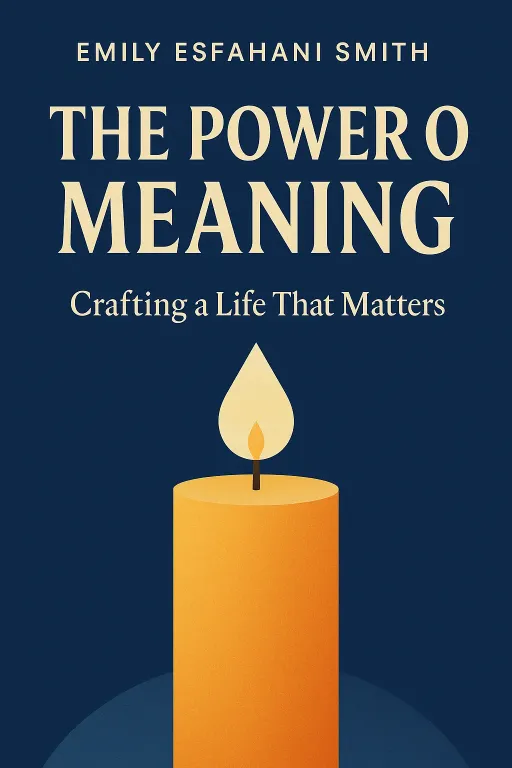
The Power of Meaning: Crafting a Life Beyond Happiness
10 minGolden Hook & Introduction
SECTION
Nova: Okay, Atlas, give it to me straight. "The Power of Meaning" by Emily Esfahani Smith, and of course, "Man's Search for Meaning" by Viktor Frankl... five words each. What's your take?
Atlas: Beyond fleeting joy, lasting purpose. Your turn.
Nova: Meaning builds, happiness just visits. It really does, doesn't it? We're diving into two absolute titans today, books that fundamentally shift how we think about what makes a good life. Emily Esfahani Smith, a journalist who masterfully synthesizes psychology, philosophy, and literature, gives us a practical framework for meaning that resonated so widely, especially as a counterpoint to our relentless pursuit of happiness.
Atlas: And then you have Viktor Frankl, whose work, born from his horrific experiences in Nazi concentration camps, is this undeniable, stark testament to meaning's power in the face of unimaginable suffering. It's almost unfair to put them in the same breath, but their insights are profoundly connected.
Nova: They absolutely are. And what's fascinating is how often we, as humans, chase after happiness, thinking it's the ultimate goal. We hit our targets, achieve our dreams, maybe even tick all the boxes society tells us to, yet sometimes, there's this weird, hollow feeling. This lingering emptiness.
Atlas: Oh, I know that feeling. It's like you've climbed the mountain, you're at the summit, and you're supposed to be ecstatic, but you just feel... a bit flat. So, are we saying happiness is bad? Or just insufficient for someone trying to build something foundational, like many of our listeners who are architects of systems and communities?
The Insufficiency of Happiness as a Sole Pursuit
SECTION
Nova: That’s a great question, and no, we’re not saying happiness is bad at all! Happiness is wonderful, it’s a pleasant emotion, a fleeting state. But it’s exactly that—fleeting. And when we make it the pursuit, we set ourselves up for disappointment. It’s like trying to build a skyscraper on a foundation of shifting sand.
Atlas: Right, like trying to build a robust system on a constantly changing user preference. It might work for a bit, but it’s not sustainable.
Nova: Exactly. Emily Esfahani Smith really digs into this. She shares stories of people who had everything by conventional standards – wealth, success, perfect families – but felt profoundly unfulfilled. One powerful example she shares is of a highly successful corporate lawyer, let's call him David. David had all the trappings of success: a corner office, a high salary, a beautiful home. He worked tirelessly, believing each promotion, each bonus, would bring him the happiness he craved.
Atlas: Sounds like a lot of people I know, constantly chasing the next milestone. What happened to David?
Nova: He achieved it all. He reached the peak of his profession. But instead of the euphoria he expected, he felt this pervasive sense of emptiness. He described it as a quiet despair, a feeling that something fundamental was missing, despite having everything he was told would make him "happy." His life, from the outside, was perfect. But inside, he was adrift.
Atlas: Wow, that’s heartbreaking, but also incredibly relatable for anyone who’s ever pushed themselves to achieve a goal, only to find the satisfaction gone the moment they hit it. So, that emptiness—how does it manifest for someone who's constantly striving and achieving, like our listeners who are building and cultivating?
Nova: It’s insidious. It can look like burnout, a lack of motivation, or even questioning the entire point of their hard work. For someone building a robust system or a vibrant community, it can lead to a sense of 'what's the point of all this effort if it doesn't truly satisfy me?' It's not about the joy of the work itself, but the deeper meaning behind it. Smith argues that this yearning for something more profound is a universal human experience. It points to a deeper need for meaning.
Atlas: So basically you’re saying, if you're building a house, happiness is like the paint color on the walls—it's nice, it makes it look pretty, but it's not the structure. And if the structure isn't there, no amount of paint will make it stand.
Meaning as a Foundation for Sustained Well-being
SECTION
Nova: That’s a perfect analogy, Atlas. And if happiness isn't the whole answer, what is? This is where meaning truly shines. Smith identifies four pillars of meaning: belonging, purpose, storytelling, and transcendence. They're like the strong, load-bearing walls of that house you just described.
Atlas: Okay, I’m curious. How do these pillars translate into something tangible, especially for someone focused on creating lasting value and human connection?
Nova: Let's look at purpose first. This is about having a goal that extends beyond yourself, something you're working towards that benefits others. It's the 'why' behind what you do. But to truly understand the power of meaning, we have to talk about Viktor Frankl. His work provides the most stark, undeniable case study for meaning's resilience.
Atlas: You mean "Man's Search for Meaning." I've heard of it, but I don't think I've ever truly grasped the depth of his experience.
Nova: It's almost unfathomable. Frankl was a psychiatrist, imprisoned in multiple Nazi concentration camps, including Auschwitz. He witnessed atrocities that would break most people. Yet, he observed something remarkable: even in those hellish conditions, some individuals not only survived but found a reason to live.
Atlas: That sounds rough, but how is that even possible? When everything is taken from you, what meaning is left?
Nova: Exactly. Frankl noted that those who survived often had a 'why.' For some, it was the hope of reuniting with loved ones; for others, it was a piece of unfinished work, like a manuscript he desperately wanted to publish. He recounts how he would mentally reconstruct his lectures, imagine himself speaking to an audience about his theories, even while starving and freezing. This was his purpose.
Atlas: So, even in the most horrific circumstances, where every basic human need was stripped away, meaning became the ultimate fuel. It’s like the ultimate stress test for the concept.
Nova: It absolutely is. He emphasized that we have the freedom to choose our attitude, even when we can't choose our circumstances. He saw prisoners giving away their last crust of bread to comfort another, or finding beauty in a sunset, or even deriving meaning from their suffering itself, seeing it as a test of their inner strength. This isn't about happiness; there was no happiness to be found. This was about profound meaning, which gave them the will to live.
Atlas: That’s actually really inspiring. But how does someone who isn't in extreme circumstances find that kind of profound meaning through 'belonging' or 'transcendence' in their everyday life, especially when they're focused on building tangible systems and communities? That sounds a bit out there.
Nova: It's not out there at all, Atlas. Let's break it down. 'Belonging' is about being in relationships where you're valued for who you are, not just what you do. For someone building a community, this is fundamental. It's about fostering genuine connections, creating a space where people feel seen and heard. It's the opposite of superficial networking.
Atlas: Right, like, it's not just about having a large team, but about creating psychological safety and shared identity within that team.
Nova: Precisely. Then 'storytelling' is about making sense of your experiences, both good and bad, and shaping them into a coherent narrative that gives your life purpose. It's about understanding your past, present, and future as a continuous, meaningful journey. For an 'architect' or 'cultivator,' this means reflecting on the wins and lessons, as your growth recommendations suggest, and seeing how they contribute to a larger vision.
Atlas: Okay, so it’s not just about the data, but the narrative you build around it to guide your vision. And what about 'transcendence'? That still feels a bit... ethereal.
Nova: Transcendence is about connecting to something larger than yourself—it could be nature, art, spirituality, or even a deep sense of flow when you're completely absorbed in a challenging task. For someone building a system, it could be the elegant beauty of a perfectly designed architecture, or the profound satisfaction of seeing your community thrive beyond your individual effort. It's the feeling of being part of something bigger, something that outlasts you.
Atlas: That gives me chills. So, it's not about escaping reality, but actually your connection to it, seeing the bigger picture in your work. It's trust your intuition as much as your data, right? Your inner compass guiding your vision.
Synthesis & Takeaways
SECTION
Nova: Exactly. What Frankl and Smith both illuminate is that meaning isn't something you find pre-packaged; it's something you build, often through active engagement with the world and through your relationships. It's a choice you make, even in the face of adversity. This understanding validates your inherent drive to build something lasting and significant, far beyond fleeting satisfaction. It’s about cultivating that inner compass that guides your vision, even when external metrics might falter.
Atlas: So, for our listeners who are constantly building, striving, and creating lasting value, shifting focus from merely 'being happy' to actively 'seeking and creating meaning' can empower them to navigate the inevitable highs and lows with remarkable resilience. It’s about building a robust foundation for their own well-being, just as they build robust systems for others.
Nova: Absolutely. It transforms the journey from a chase to a construction project. And that brings us to our healing moment: Reflect on a time you felt deeply connected to something larger than yourself. What elements were present in that experience? What did it feel like? Ponder that, because those elements are your building blocks for meaning.
Atlas: That's a powerful reflection. It's not just about what you did, but what you and what you.
Nova: Precisely. And understanding that connection is key to sustaining your energy, no matter how demanding the building process becomes.
Atlas: What a thought-provoking way to look at our lives and our work.
Nova: This is Aibrary. Congratulations on your growth!









