

The 'Busy Trap' is a Trap: Why Focused Execution Delivers Real Agent Value.
9 minGolden Hook & Introduction
SECTION
Nova: What if I told you that being perpetually swamped, always 'on,' and juggling a dozen tasks simultaneously... is actually the fastest way to your ability to create anything truly groundbreaking in Agent engineering?
Atlas: Whoa, Nova, that's a bold claim. Most of us wear 'busy' like a badge of honor. It feels productive, right? Are you saying our hustle culture is actually sabotaging us, especially when we're trying to build complex AI systems?
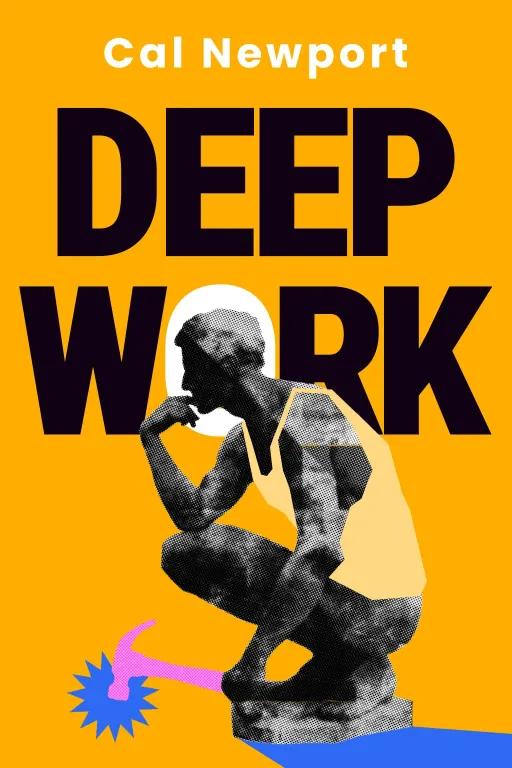
Nova: Absolutely, Atlas. It's a pervasive blind spot. We equate activity with progress, but in the world of sophisticated Agent design, that couldn't be further from the truth. We're talking about the "busy trap," and today we're going to dismantle it, inspired by two phenomenal books: by Cal Newport and by Greg McKeown.
Atlas: Ah, Newport and McKeown. I know Newport is famous for being a computer science professor who famously avoids social media, which honestly, makes him incredibly credible on the topic of focus. And McKeown is a master of strategic clarity. So, you’re saying they offer the antidote to this 'busy trap'?
Nova: Exactly. They offer the blueprint for what I call "focused execution." For our listeners – the full-stack engineers, the architects, the value creators in Agent engineering – this isn't just about personal productivity. This is about building more robust, scalable, and genuinely intelligent Agent systems. Let's start by really digging into why this 'busy trap' exists and why it's such a dangerous illusion.
The Deceptive Allure of Busyness: Why Constant Activity Hinders True Agent Value
SECTION
Atlas: Okay, so you're saying my packed calendar, back-to-back meetings, and constantly switching between a dozen different Agent modules... that's not actually me being a high-performer? That's quite a pill to swallow. I mean, it like I'm doing a lot.
Nova: That's the deceptive allure, isn't it? It like you're doing a lot, but what kind of "doing" is it? In, Newport makes a crucial distinction between "deep work" and "shallow work." Shallow work is non-cognitively demanding, often logistical, easily replicated. Think endless email chains, status updates, or context-switching between minor tasks. Deep work, on the other hand, is the ability to focus without distraction on a cognitively demanding task.
Atlas: So you're saying the crucial part is the and the? Because in Agent engineering, we're constantly dealing with complex algorithms, nuanced decision trees, and intricate system architectures. That sounds like the definition of cognitively demanding.
Nova: Precisely. Imagine you're trying to design a novel multi-agent coordination protocol. This requires hours of uninterrupted, concentrated thought to avoid subtle failure modes or security vulnerabilities. If you're constantly pulled into Slack messages, quick "sync-ups," or reacting to every minor alert, what happens? Your attention fragments. You never achieve the necessary depth of thought.
Atlas: Right, like trying to build a delicate, complex piece of a machine, but every five minutes someone taps your shoulder and asks you to tighten a different bolt on a different machine. You'd never finish the first one properly, let alone innovate.
Nova: That's a perfect analogy. For Agent architects, shallow work leads to brittle systems. It leads to technical debt that accrues because you didn't have the focused time to consider the long-term implications of a design choice. It leads to missed opportunities for true innovation because your brain is always in reactive mode, never in creative, exploratory mode. The output might look like "busy activity," but the created is significantly diminished.
Atlas: So basically, if I'm not carving out significant, uninterrupted blocks of time to truly about an Agent's core logic or its interaction patterns, I'm just building a house of cards, even if I'm working 60 hours a week? That's a bit unsettling. What are some common "shallow work" activities that an Agent engineer might fall into without realizing it?
Nova: Great question. Beyond the obvious emails and meetings, it could be constant monitoring of dashboards without a clear objective, endless tweaking of hyperparameters without a hypothesis, or getting pulled into every single code review, even for modules outside your core expertise. It’s anything that prevents you from allocating your peak cognitive hours to the most challenging, high-impact problems.
Atlas: I know that feeling. It’s almost like a default setting, isn't it? If you don't intentionally block out time for deep work, the shallow work just expands to fill every available moment. That makes me wonder, how do we actually break free from this?
Unlocking Impact: The Power of Deep Work and Essentialism in Agent Engineering
SECTION
Nova: That naturally leads us to the antidote. If the problem is fragmented attention and non-essential tasks, the solution lies in cultivating intense focus and radical prioritization. This is where Cal Newport's and Greg McKeown's become superpowers for our Agent engineers.
Atlas: Superpowers, I like that! So, how do they connect? Because "Deep Work" sounds like an individual discipline, while "Essentialism" feels more like a strategic, organizational mindset.
Nova: They are two sides of the same coin, Atlas. is about you do the work – the mental discipline to focus intensely. Newport gives us four rules: "Work Deeply," which means scheduling and protecting your deep work blocks; "Embrace Boredom," training your brain to resist distraction by letting it wander rather than constantly reaching for your phone; "Quit Social Media," which is self-explanatory; and "Drain the Shallows," which is about ruthlessly minimizing that low-value, high-distraction work.
Atlas: "Drain the Shallows" resonates so much with the architect mindset. It's about optimizing resource allocation, but for your own cognitive energy. But how do you even know to drain? That's where McKeown comes in, right?
Nova: Exactly. is about work you choose to do. McKeown advocates for doing less, but better. He shows you how to identify and eliminate non-essential activities to maximize your contribution to what truly matters. For an Agent architect, this is critical. It means understanding which Agent features, which architectural decisions, which optimization strategies will deliver the most significant value. It's about asking, "Is this absolutely essential to the core mission of our Agent system?"
Atlas: So, helps you decide which battles to fight, and gives you the laser focus to win those battles. That's powerful. Can you give a concrete example of how an Agent engineering team might implement this?
Nova: Imagine an Agent engineering team struggling with feature creep. Every stakeholder has a request, leading to a sprawling, unstable Agent. An Essentialist approach would involve the lead architect ruthlessly scrutinizing every proposed feature against the Agent's core value proposition. They'd say "no" to 90% of requests, protecting the Agent's core functionality.
Atlas: Which is incredibly hard to do, by the way. Saying 'no' often feels like you're not being a team player.
Nova: It is hard, but it's essential for long-term value. Once those essential features are identified, a Deep Work approach would mean the engineers schedule dedicated, uninterrupted blocks—maybe two hours every morning—solely for designing and implementing those core Agent decision logics or a critical new perception module. During that time, Slack is off, emails are closed, and meetings are deferred.
Atlas: So, instead of reacting to every fire drill, they're proactively building robust foundations. I can see how that would lead to a more stable, scalable Agent system in the long run, and ultimately, more business value. It's not just about getting more done; it's about getting the things done, exceptionally well.
Nova: And that's where the breakthrough comes. The ability to concentrate profoundly on a single task, combined with the discipline to only work on the most important tasks, creates a synergistic effect. It allows you to tackle the truly hard problems in Agent engineering – optimizing complex reward functions, ensuring ethical AI behavior, or designing resilient multi-agent collaboration – with the cognitive horsepower they deserve.
Atlas: I love that idea of "cognitive horsepower." It’s a finite resource, and we're often squandering it on busywork. This isn't just about personal efficiency; it's a strategic advantage for any team building intelligent systems.
Synthesis & Takeaways
SECTION
Nova: Absolutely. The synthesis here is profound: true value creation in Agent engineering isn't about the quantity of hours you log, but the quality of focus you bring to the most essential tasks. It's about moving from a reactive, scattered mindset to a proactive, laser-focused strategy. This shift helps you build Agents that are not just functional, but truly transformative, stable, and scalable.
Atlas: That's actually really inspiring. It redefines what it means to be a "high-performer" in our field. It’s not about how many tasks you can juggle, but how deeply and strategically you can tackle the most impactful ones.
Nova: Precisely. And for our listeners, the architects and value creators striving to make a real mark, we want to leave you with a challenge straight from the core of this discussion. What is one 'shallow work' activity you could eliminate this week to create more time for deep, concentrated effort on your Agent projects? Really think about it.
Atlas: That’s a powerful question. It forces us to confront our own busy traps. I’d love to hear what our listeners identify. Share your thoughts with us, what’s one thing you’re going to cut out to make space for deep work?
Nova: It’s a small step, but it's the beginning of a profound shift. Start there, and watch the quality of your work—and your Agent systems—transform.
Atlas: Excellent advice, Nova. This is Aibrary. Congratulations on your growth!









