

The Hidden Power of Vulnerability: Building Authentic Connections for True Impact
10 minGolden Hook & Introduction
SECTION
Nova: Most of us equate vulnerability with weakness. A chink in the armor, right? Something to hide, especially when you're leading a team, or trying to build something significant.
Atlas: Huh, that's a pretty bold claim right off the bat, Nova. I imagine a lot of our listeners, especially those building and leading, are taught the exact opposite – project strength, maintain control, never let them see you sweat.
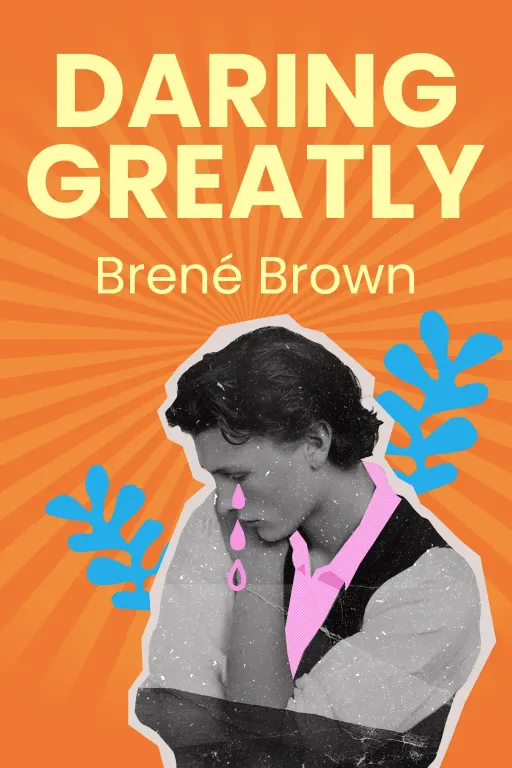
Nova: Absolutely, Atlas. And that's precisely what we're challenging today as we dive into Brené Brown's transformative work, 'Daring Greatly.' Brown, a research professor known for her decades of qualitative research on courage, vulnerability, shame, and empathy, literally redefined how millions understand emotional exposure. Her work brought a scientific rigor to something often dismissed as 'soft skills,' showing its profound impact on everything from personal relationships to organizational culture.
Atlas: That's huge, because it sounds like it challenges everything we're taught about strength. So, where do we even begin with redefining vulnerability? Because for many, it just feels like opening yourself up to getting hurt.
Nova: We start with her core argument: vulnerability isn't weakness; it's our most accurate measure of courage. It's the emotional risk, exposure, and uncertainty we face every day. Think about it. When you dare to speak your truth, ask for help, or innovate without a guaranteed outcome – that's vulnerability in action. And that, Brown argues, is courage.
Atlas: I guess that makes sense. It takes courage to step into the arena, as she often says. But for a strategic builder, for someone who values patterns and sustainable success, the idea of embracing uncertainty, of exposing a 'chink in the armor,' feels counter-intuitive to building solid foundations. What does Brown say to that immediate gut reaction?
Vulnerability as the Ultimate Measure of Courage
SECTION
Nova: She would say that you're hitting on the core tension. We crave certainty, but life and innovation are inherently uncertain. Her research, which involved thousands of stories and interviews, revealed that the people who live what she calls 'wholehearted lives' – lives marked by courage, compassion, and connection – are the ones who fully embrace vulnerability. They understand it's the birthplace of joy, love, belonging, creativity, and trust.
Atlas: Oh, I see. So it's not about being reckless, but about understanding that these deeper, more meaningful aspects of life and work can't exist without that element of risk. It's like you can't build a truly innovative product without risking failure, right?
Nova: Exactly! It's the willingness to show up and be seen when you can't control the outcome. Let me give you an example from her research. She talks about a CEO who had to deliver some tough news to his team—a major project was being scrapped due to unforeseen market shifts. Instead of just presenting the facts and a new plan, he started by sharing his own disappointment, his fear for what this meant for the team, and even admitted he felt he had let them down.
Atlas: Whoa. That’s a bold move. Most leadership books would tell you to project unwavering confidence, even if you're sweating bullets inside.
Nova: Right? But here’s the fascinating part: his team didn't lose faith. They didn't see him as weak. Instead, they rallied. They saw his honesty as a profound act of courage. It created an immediate sense of psychological safety. People started sharing their own fears, their own ideas, and collaboratively, they pivoted faster and more effectively than if he had just delivered a stoic, top-down mandate. The emotional risk he took—the vulnerability—unlocked their collective ingenuity.
Atlas: That’s actually really inspiring. It makes me wonder, though, how do you differentiate between that courageous vulnerability and just... oversharing, or emotional dumping? Because I imagine some leaders might hear this and think it means they need to cry in front of their team every Tuesday.
Nova: That's a critical distinction. Brown is very clear: vulnerability isn't about indiscriminately exposing your deepest fears to everyone. It's about appropriate boundaries, trust, and connection. It’s about sharing your authentic self with people who have earned the right to hear your story. It's not a free-for-all. It's a calculated, brave choice to be seen, to foster connection, and to build trust. It’s strategic.
Atlas: Strategic vulnerability. I like that. So, it's not just about feeling your feelings, it's about leveraging that emotional courage to achieve something greater, to build something more resilient. And I imagine that translates directly into the realm of leadership and culture.
Authentic Leadership: Vulnerability as the Foundation for Impact and Culture
SECTION
Nova: It absolutely does. This leads us perfectly into our second core idea: how vulnerability becomes the foundation for authentic leadership, driving true impact and building adaptable cultures. This is where Brown's insights beautifully intersect with someone like Simon Sinek.
Atlas: Oh, I'm already thinking about Sinek's "Start with Why." Sharing your 'why' is inherently vulnerable, isn't it? It's exposing your core beliefs, your purpose, to the world.
Nova: Exactly! Sinek emphasizes that people don't buy what you do; they buy why you do it. And getting to that 'why,' articulating it, and living it authentically requires immense vulnerability. It means being willing to stand for something, even if it's unpopular, even if it means risking rejection. Sinek, with his background in military leadership, understands that true loyalty and commitment come from shared purpose, not just shared tasks.
Atlas: That makes me wonder, how does a leader, who is trying to attract top talent and build an adaptable, innovative team – which our listeners are certainly focused on – use this concept of vulnerable 'why' to their advantage? It sounds like a powerful recruiting strategy.
Nova: It's precisely that. Imagine a company leader trying to recruit. They could list benefits and responsibilities, or they could share their deeply personal 'why' – maybe it's a childhood experience that fueled a passion for sustainable energy, or a moment of injustice that drove them to create a more equitable tech solution. When they share that authentic 'why,' they are being vulnerable, opening themselves up to judgment but also to deep connection.
Atlas: You're saying that vulnerability in sharing your 'why' isn't just about emotional appeal, it's a filter. It attracts people who resonate with that core purpose, rather than just chasing a paycheck.
Nova: Precisely. It creates a culture-first leadership approach. When leaders are vulnerable about their purpose and their struggles, it signals to their team that it’s safe to be human. It fosters psychological safety, which is the bedrock of innovation. Studies have shown that teams with high psychological safety are more likely to admit mistakes, share diverse ideas, and take intelligent risks – all crucial for rapid, sustainable product growth.
Atlas: That’s a perfect example. I remember hearing about a leader of a tech startup who was facing immense pressure from investors to pivot to a more 'market-friendly' but less purpose-driven product. In a town hall, he didn't just explain the numbers; he shared his personal conflict, his fear of compromising the company's original mission, and asked the team for their input, not just their obedience.
Nova: Yes! That's a textbook example of vulnerable leadership. He risked appearing indecisive or even weak to his investors and parts of his team. But by sharing his internal struggle, he invited them into the decision-making process, validated their own potential doubts, and ultimately strengthened their collective resolve to find a solution that honored their core values. They didn't just execute a pivot; they owned it. That's how you build an adaptable and truly innovative team, not just a compliant one.
Atlas: Honestly, that sounds like my Monday mornings, trying to balance vision with practical realities. It highlights that vulnerability isn't just about confessing mistakes, but about being open about the difficult choices and trade-offs inherent in leadership. It builds trust, which is the ultimate currency of any successful team or ecosystem.
Synthesis & Takeaways
SECTION
Nova: Absolutely, Atlas. What we’ve seen today, from Brené Brown’s meticulous research to Simon Sinek’s insights on purpose, is that vulnerability isn't a soft skill to be dismissed. It's a strategic imperative. It's the courage to be seen, to share your authentic 'why,' and in doing so, you don't just build products or companies; you build profound connections, resilient cultures, and ultimately, a more impactful and wholehearted life.
Atlas: That’s a really powerful reframing. It moves vulnerability from a personal weakness to a leadership strength, a foundational element for anyone who wants to build something meaningful and lasting. It ties directly into trusting your inner wisdom and embracing the journey, even when it's uncomfortable.
Nova: Indeed. The healing moment for all of us, for our listeners who are strategic builders and culture architects, is to consider this: Where have you held back? What small act of vulnerability could you try next week to foster deeper trust or connection? Maybe it's admitting you don't have all the answers, or sharing a personal story behind your company's mission.
Atlas: Yeah, I can definitely relate to that. Just one small step, one moment of daring to be seen. That’s a concrete challenge for anyone looking to build a more authentic and impactful future.
Nova: This is Aibrary. Congratulations on your growth!









