

The Feeling: Why Vulnerability Unlocks True Connection
10 minGolden Hook & Introduction
SECTION
Nova: Atlas, quick game for you. Give me five words that describe what most people think of as a "strong leader." Go!
Atlas: Oh, man, that's easy: Decisive, unflappable, always-right, commanding, and... bulletproof.
Nova: Bulletproof. I love that. And honestly, that's probably what a lot of us aspire to be, right? This impenetrable force leading the charge. But what if I told you that bulletproof, in leadership, is actually a recipe for isolation?
Atlas: Huh. That's a pretty bold claim, especially when you consider the pressure leaders are under to project absolute confidence. Where are you even getting this idea?
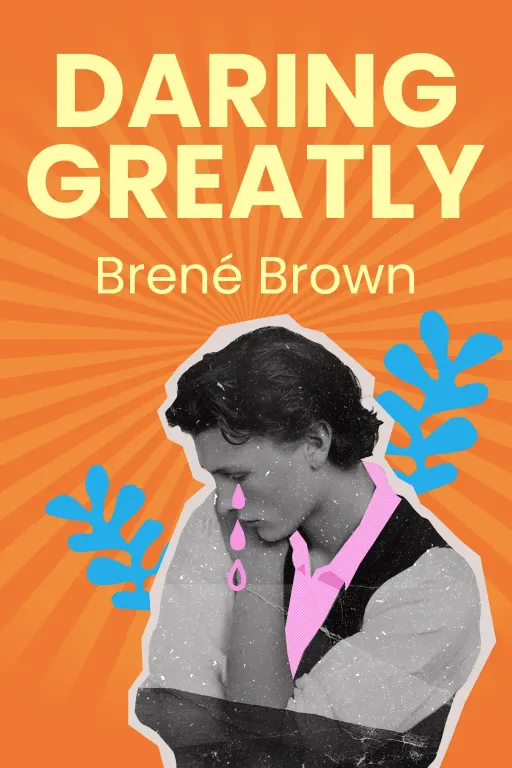
Nova: Well, it comes from the groundbreaking work of Brené Brown, specifically her books and. Brown, a research professor from the University of Houston, initially spent years studying shame and empathy. But it was her deep dive into vulnerability and courage that really shifted her focus, leading to a TED Talk that basically broke the internet and brought these complex emotional concepts right into the heart of how we think about leadership and connection.
Atlas: Okay, so a research professor is telling us that being "bulletproof" is bad. But how does —which sounds suspiciously like weakness to most of us—suddenly become a leadership superpower? That feels counter-intuitive to anyone trying to climb the ladder.
Nova: Exactly! And that's the core of her argument, and frankly, the most profound insight. We've been conditioned to believe that vulnerability is a liability, something to be hidden or overcome. But Brown’s research flips that script entirely.
The Counter-Intuitive Strength of Vulnerability
SECTION
Nova: She defines vulnerability as "uncertainty, risk, and emotional exposure." It's not about oversharing or being fragile; it's about showing up fully, even when you can't control the outcome. And here's the crucial part: she identifies it as the most accurate measure of courage. Think about that. The very act of being vulnerable courage.
Atlas: So you're saying that the moment we feel most exposed is actually when we're being our bravest? That's a mental gymnastics routine right there. For our listeners who are in high-stakes environments, where every decision is scrutinized, this concept might feel like a fast track to being eaten alive.
Nova: I can definitely relate to that fear. We armor up. We put on a brave face. We pretend we have all the answers. But what Brown found is that this armor, while it might protect us from perceived pain, also completely cuts us off from genuine connection. It creates a chasm between leaders and their teams, leading to a profound sense of isolation.
Atlas: That makes sense, but what does it look like in practice? Is it just about saying "I don't know" more often? Because that could backfire for some.
Nova: Not just saying "I don't know," but genuinely being open to not knowing, and admitting it when appropriate. Let me give you a hypothetical, but very real-world scenario. Imagine a project manager, let's call her Sarah, leading a complex tech initiative. Her team hits a major roadblock, a technical challenge nobody on the team, including Sarah, has encountered before. The pressure from upper management is immense.
Atlas: I know that feeling. The instinct is to lock yourself in a room, Google furiously, and emerge with a "solution" even if it's half-baked.
Nova: Precisely. The traditional "bulletproof" leader would try to solve it alone, or worse, pretend they already had a plan. But Sarah, remembering the principles of vulnerability, does something different. She gathers her team and, instead of projecting absolute certainty, she says, "Team, we've hit a wall here. This is new territory for all of us, and honestly, I don't have the immediate answer. I'm feeling the pressure, just like you are, and I'm a little worried about how we'll solve this."
Atlas: Whoa. That's... exposed. My initial thought is, "Is she losing control?"
Nova: Exactly the initial reaction many might have. But then she continues, "But I also know that collectively, we are smarter than any one of us individually. I need your best thinking, your creativity, and your willingness to experiment. Let's tackle this together."
Atlas: And what happens? Does the team panic? Do they lose faith?
Nova: Initially, there might be a moment of surprise, perhaps even discomfort. But then, a profound shift. Her team members, instead of feeling like they have to hide their own uncertainties, suddenly feel permission to be honest. They start brainstorming, throwing out wild ideas, admitting their own lack of expertise in certain areas, and offering to research. The psychological safety in that room skyrockets. They don't see Sarah as weak; they see her as courageous, as human, and as someone who trusts.
Atlas: So, by admitting her own uncertainty, she actually unlocked the collective intelligence and trust of her team? That's actually really inspiring. It’s like she modeled the behavior she wanted to see.
Nova: Exactly. The cause was the complex problem and Sarah's internal conflict. The process was her courageous choice to be vulnerable. The outcome was not only a more engaged and empowered team, but very likely a better solution because everyone felt safe enough to contribute their best.
From Concept to Practice: Cultivating Vulnerable Leadership
SECTION
Atlas: Okay, so I'm starting to get it. It's not about being a mess; it's about being real. That leads me to wonder, how do leaders actually this without turning every meeting into a therapy session? You mentioned Brown's work on leadership specifically. What are the practical steps?
Nova: That's where comes in. Brown extends her research to the workplace, showing how leaders can cultivate cultures of courage, compassion, and connection. It’s not about emotional free-for-alls. It’s about intentional, strategic vulnerability. One key practice she highlights is "rumbling with vulnerability." This means having tough conversations, being honest about fears, and leaning into discomfort with curiosity rather than defensiveness.
Atlas: "Rumbling with vulnerability." I like that. It sounds active, not passive. So how does a leader actually initiate that kind of rumble?
Nova: Another practical application is "living into values." Leaders often have espoused values, but Brown challenges us to examine if we're actually them. Are you truly practicing courage, empathy, or integrity when it's difficult? This often requires leaders to share their own struggles with living up to those values, showing their humanity.
Atlas: In other words, if you preach transparency, you better be transparent yourself, even when it's uncomfortable.
Nova: Precisely. And that builds trust. It's about creating an environment where people feel safe to be seen and heard. Let me give you another example. Consider David, a CEO who wants to foster a culture of continuous improvement and learning. He knows that people are often afraid to admit mistakes or areas where they need help.
Atlas: Especially in a top-down structure, admitting a mistake could feel career-limiting.
Nova: Absolutely. So, David decides to model the behavior. During a quarterly review, instead of just highlighting successes, he openly shares a significant professional setback he experienced early in his career—a project where he made a critical error that cost the company a lot of money. He describes the fear, the shame, and then, crucially, the specific lessons he learned and how that failure shaped his approach to leadership today.
Atlas: Wow, that takes guts. I imagine a lot of listeners are thinking, "My boss would never do that."
Nova: That's the point. The cause here was David's desire for a learning culture and his recognition of the fear of failure. His process was a deliberate, personal disclosure of a past error, not to elicit pity, but to illustrate resilience and growth. The outcome? His team saw him as a leader who wasn't afraid to be human, who learned from mistakes, and who valued that learning process. It normalized failure as a part of growth, significantly reducing the fear of making mistakes within his team and increasing psychological safety. People started sharing their own "failures" and lessons learned, leading to more open problem-solving.
Atlas: That's a perfect example of how it trickles down. By showing his own wound, he gave everyone permission to be less perfect, which actually made them better. So, for an aspiring leader listening, what's the small step they could take this week to start cultivating this kind of vulnerable leadership?
Nova: Honestly, it starts small, often with self-reflection. Think of a time this week where you felt an urge to appear strong or infallible, maybe when you didn't have an immediate answer or felt overwhelmed. How did you handle it? And how might you approach it differently next time, choosing courage over comfort, to lean into a moment of vulnerability? It could be as simple as saying, "I'm not sure, but I'll find out," or "This is tough, and I'm with you on it."
Synthesis & Takeaways
SECTION
Nova: What Brené Brown ultimately shows us, Atlas, is that the pursuit of being "bulletproof" actually makes us brittle. True strength in leadership isn't about invulnerability; it's about the profound courage to be seen, to connect authentically, and to foster an environment where everyone can show up fully—imperfections and all.
Atlas: It's about trading the illusion of control for the reality of connection. And that connection, that trust, is what truly builds resilient teams and inspires deep, unwavering loyalty. It's the difference between a team that follows orders and a team that follows.
Nova: Absolutely. It transforms the workplace from a battleground of ego into a space of collaborative growth and genuine human connection. The impact on morale, innovation, and ultimately, results, is immeasurable.
Atlas: So, for everyone listening, this week, think of one situation where you could choose courage over comfort. Lean into a moment of vulnerability, however small, and observe the shift. That's your dare to lead.
Nova: This is Aibrary. Congratulations on your growth!









