Unleash Your Inner Innovator: Harnessing Creativity for Breakthroughs.
9 minGolden Hook & Introduction
SECTION
Nova: What if everything you thought about innovation was wrong? What if it's not a sudden flash of genius, a random lightning strike of an idea, but something much more deliberate? A muscle you can actually strengthen, a discipline you can master?
Atlas: Oh man, that's a big claim, Nova. Because honestly, for most of us, myself included, innovation feels precisely like that: unpredictable, rare, a 'hope-for-the-best' situation. You’re telling me I can train my innovation muscle?
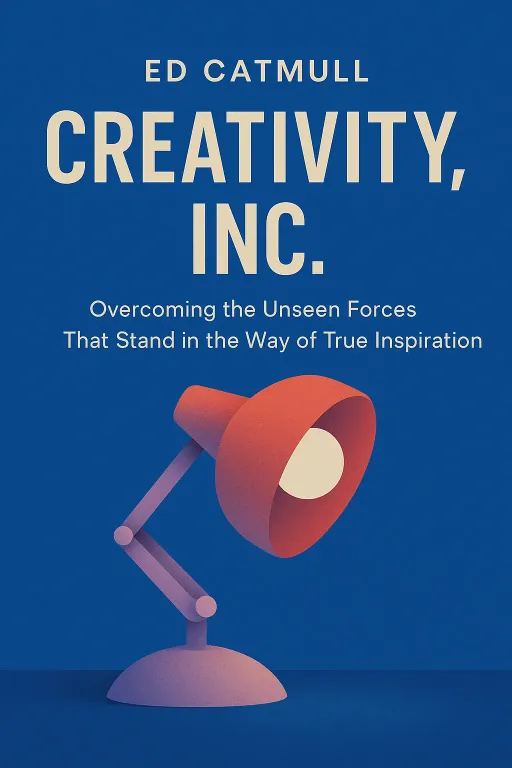
Nova: Absolutely, Atlas. And that's the cold, hard fact that true innovators understand. Creativity isn't just an innate gift; it's a skill that can be cultivated, managed, and even engineered. Today, we're diving into how to unlock that potential, drawing from two incredible minds. First up, we're looking at "Creativity, Inc." by Ed Catmull.
Atlas: Oh, the Pixar guy! I love Pixar.
Nova: Exactly! Ed Catmull isn't just a business leader; he's a computer graphics pioneer who co-founded Pixar Animation Studios. His background uniquely merges deep technical expertise with artistic vision, giving him this incredible perspective on how to build cultures where creativity doesn't just survive, it thrives. He shows us how to move beyond wishing for innovation and start building it.
Cultivating a Culture of Innovation
SECTION
Nova: So, Catmull's core premise, which he built into the very DNA of Pixar, is that you need a culture where honesty, risk-taking, and continuous feedback are not just tolerated, but paramount. He didn't want a place where people were afraid to speak up, especially when an idea was still in its infancy.
Atlas: That makes sense in theory, but I imagine a lot of our listeners, especially those in high-stakes roles, are thinking: "How do you even begin to foster that kind of psychological safety? What does that actually look like?" Because often, risk-taking feels like a fast track to failure in a traditional corporate environment.
Nova: That’s where Pixar’s "Braintrust" system comes in. It’s a brilliant example. Imagine this: a director brings in an early, often very rough, cut of a film – sometimes just storyboards. And the Braintrust, a group of their most trusted and talented peers, sits down and gives brutally honest feedback. No sugarcoating, no hierarchy. The goal isn't to tear down the director, but to tear down the.
Atlas: So it’s not about ego, it’s about the project?
Nova: Precisely. They create an environment where everyone understands that the film is more important than anyone's individual ego. The director is never to take the advice, but the expectation is that they will listen deeply and genuinely consider it. It’s a paradox: by embracing brutal honesty, they actually foster greater creativity because ideas are rigorously refined, not just accepted or shut down too quickly. It’s a safe space for dangerous ideas. For anyone trying to shape their future, this is crucial – you need that kind of honest mirror.
Atlas: I can definitely see how that would be powerful. But wait, how do you build that kind of trust without it devolving into just criticism? For someone trying to implement something like a 'Braintrust' in a traditional setting, it sounds incredibly difficult. It really speaks to the need for clarity and sustainable growth, which our listeners deeply value.
Nova: It starts at the top, Atlas. Leaders have to model vulnerability. They have to actively seek out dissenting opinions and genuinely listen. Catmull talks about how important it is to protect the new, the ugly, the unfinished ideas. Because the biggest enemy of creativity isn't failure; it's the fear of failure, and the fear of looking foolish. When leaders create space for those early, messy ideas, and protect them from premature judgment, that’s when true innovation begins to flourish. It’s about building a culture where the journey of an idea is celebrated, even if it has to pivot dramatically.
Navigating Disruptive Innovation
SECTION
Nova: Now, even with a fantastic, open, creative culture like Pixar's, companies can still face another massive hurdle: missing the next big thing. And this brings us to our second profound insight from "The Innovator's Dilemma" by Clayton Christensen.
Atlas: Ah, the classic. I’ve heard of this one. It feels like it should be required reading for anyone navigating the AI wave, trying to understand its true impact.
Nova: Absolutely. Christensen, a Harvard Business School professor, had his research for this book initially dismissed as "not academic enough." Yet, it became a seminal work, profoundly influencing how business leaders understand market disruption. His core idea is counterintuitive: successful companies often have all the resources, all the talent, but are structurally incapable of embracing disruptive technologies.
Atlas: That sounds rough. Why? Why would success itself be a trap? For our listeners who are actively seeking to shape their future and prioritize sustainable growth, this sounds like a critical blind spot.
Nova: It's because disruptive innovations initially appear inferior. They offer lower profit margins, appeal to smaller, niche markets, and don't seem to fit the established company's existing customer base or financial metrics. An example that makes this crystal clear is the hard disk drive industry.
Atlas: Oh, tell me more. I love a good tech history lesson.
Nova: In the early days, mainframe computers needed large, high-performance, high-margin hard drives. Established companies poured their R&D into making those better and better. Then, smaller, 5.25-inch drives came along. They had less capacity, were slower, and initially, had lower profit margins. The big players looked at them and thought, "Why would we bother? Our best customers don't want these, and they're less profitable."
Atlas: So they ignored them.
Nova: Exactly. But those smaller drives were perfect for a new, emerging market: personal computers. Then came the 3.5-inch drives, which were initially even 'worse' in terms of performance and profit margin, but fit the even newer market of laptops. Each time, the established leaders doubled down on their profitable, high-end products, letting smaller, nimbler companies dominate the new markets. Eventually, those "inferior" technologies improved, took over, and the former leaders found themselves playing catch-up, or worse, out of business.
Atlas: Whoa, that's incredible. So it's not that they weren't smart or didn't see the technology; it's that their existing business model and customer base literally them from acting on it? That’s going to resonate with anyone feeling the pressure of established systems. It’s like their own success blinds them to the future.
Nova: Precisely. It’s often about organizational processes, customer demands, and financial metrics that make it perfectly rational to pursue disruptive innovations until it's far too late. It highlights that breakthroughs aren't accidental; they're the result of deliberate cultural design and a willingness to challenge existing paradigms, even your own successful ones. It’s about being an ethical explorer in your own industry, looking for those seemingly small signals.
Synthesis & Takeaways
SECTION
Nova: So, when we put Catmull's cultural insights next to Christensen's strategic warnings, it paints a powerful picture. Innovation isn't just about having good ideas; it's about building the right environment for those ideas to grow, and then having the strategic foresight to recognize the ones that will truly transform your future, even if they look like tiny acorns today.
Atlas: That’s a powerful connection. So, for our listeners who are "Resilient Strategists" and "Practical Innovators," seeking clarity and purpose in this constantly shifting landscape, what's a small, consistent step they can take this week? How do they future-proof their professional path based on this?
Nova: I’d say, think about the "Tiny Step" from our initial content: reflect on a recent project where an idea was shut down too quickly. How could you have created a safer space for that idea to be explored? Could you have initiated a mini-"Braintrust" for it? Or perhaps, consider if you're overlooking a "small, inferior" idea in your own work or industry because it doesn't fit your current success metrics.
Atlas: That’s a fantastic challenge. It’s about cultivating that mindset of continuous learning, dedicating a small, consistent block of time weekly to explore one new application, one new idea, even if it feels uncomfortable or initially unprofitable. It’s how we shape our future, not just react to it.
Nova: Absolutely. It’s about becoming that ethical explorer, constantly questioning the status quo, both internally within your team and externally in your market. Don't let your current success blind you to tomorrow's breakthrough.
Atlas: A truly profound thought to leave us with. This has been incredibly insightful, Nova.
Nova: Always a pleasure, Atlas.
Nova: This is Aibrary. Congratulations on your growth!