The 'Flow State' Myth: Why Deep Work Is Your True Creative Engine.
9 minGolden Hook & Introduction
SECTION
Nova: Most people think creativity is like catching lightning in a bottle, a sudden, magical 'flow state' that just to you. It's this almost mystical experience. But what if that belief is actually the biggest obstacle to your best, most profound work?
Atlas: Whoa, that's a bold statement, Nova. I mean, everyone talks about "getting in the zone," right? That feeling where time disappears and ideas just…. Are you saying that's not real, or that it’s actually a trap?
Nova: It’s real, Atlas, but our understanding of it is often a blind spot. Today, we're dissecting that very idea, drawing insights from, a compelling examination that challenges our most romanticized notions of genius.
Atlas: And it’s a fascinating journey, especially when you consider how many of these ideas are rooted in the work of people like Cal Newport, who actually started his career as a computer scientist before becoming this massive advocate for focused work. And then there's Ed Catmull, who quite literally built Pixar from the ground up, a company synonymous with groundbreaking creativity. These aren't just philosophers; they're practitioners.
Nova: Exactly. It's not just theory; it's the lived experience of those who built remarkable things. The core of our podcast today is really an exploration of how profound creative output isn't a mystical 'flow state' that strikes at random, but rather the deliberate, disciplined outcome of intentional deep work and a carefully cultivated environment. It challenges us to rethink how we approach our most valuable mental tasks.
Atlas: Okay, so you’re saying that chasing this elusive 'flow state' might actually be preventing us from achieving what we really want? That sounds a bit counterintuitive.
The 'Flow State' Illusion vs. Deep Work's Reality
SECTION
Nova: It absolutely is counterintuitive, but that's the book's central argument. It suggests that our cultural obsession with spontaneous inspiration overlooks the consistent, deep effort required to cultivate those moments. We wait for the lightning, when we should be building the storm.
Atlas: So, when you say "deep work," what exactly are we talking about here? Because for many of our listeners, their day is a constant barrage of meetings, emails, and urgent tasks. The idea of "deep work" sounds like a luxury.
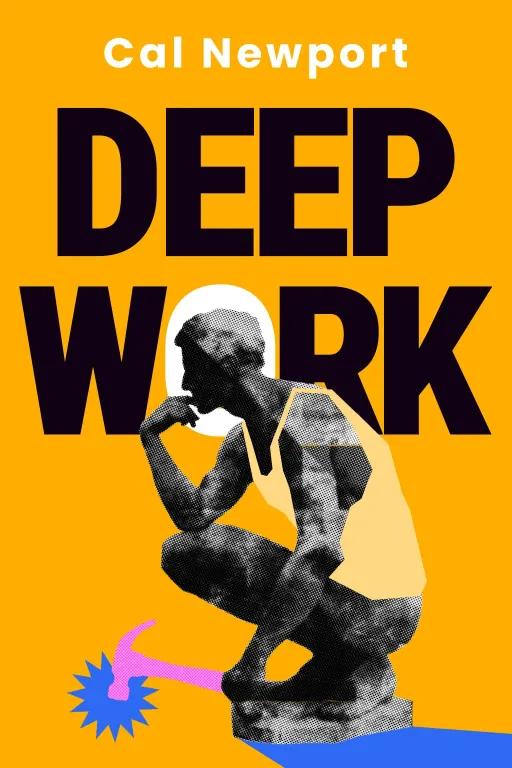
Nova: That’s where Cal Newport comes in. He defines deep work as professional activities performed in a state of distraction-free concentration that push your cognitive capabilities to their limit. These efforts create new value, improve your skill, and are hard to replicate. The book argues that true creative output, the kind that moves the needle, comes from this intense focus, not from multitasking or sporadic bursts of inspiration.
Atlas: But isn't getting into a flow state about intense focus? What's the difference?
Nova: The difference is cause and effect. Many people see flow state as the of creativity. They think, "If I can just get into flow, I'll be creative." This book flips that. It shows that flow is often a of deep work. You don't chase flow; you create the conditions for deep work, and flow might emerge as a reward. Think of an elite athlete. They don't just "flow" onto the Olympic podium. They spend years in grueling, repetitive, focused training. The "flow" they experience during a competition is a result of that deep, deliberate practice.
Atlas: Ah, so it's not about waiting for inspiration to strike, it's about building the muscle that makes inspiration more likely to show up. That makes me wonder, if we're constantly distracted, which most of us are, are we essentially guaranteeing that we'll hit that deep creative stride?
Nova: Precisely. The book highlights that in our current always-on, notification-driven culture, truly valuable creative work requires intense focus without distraction. If your environment is constantly pulling you away, you're not just losing a few minutes; you're preventing your brain from ever reaching the necessary depth for breakthrough thinking. It's like trying to fill a bucket with a hole in it.
Atlas: That's actually really sobering. It makes me think of all the times I’ve tried to tackle a complex problem with my email open and notifications popping up. I thought I was being efficient, but I was probably just being… shallow.
Designing Your Creative Engine: Strategies for Intentional Cultivation
SECTION
Nova: It’s a common trap. And that naturally leads us to the practical side: how do we actually deep work and cultivate an environment where creativity flourishes? This is where the book brings in strategies from both Cal Newport and Ed Catmull.
Atlas: Okay, so if the goal is to build the storm, not just wait for the lightning, what are some of the blueprints? What should our listeners be?
Nova: Newport provides concrete strategies to train your attention. It’s about creating blocks of uninterrupted time for your most demanding tasks. He talks about scheduling deep work, almost like an appointment you can't miss. For example, a software engineer might block off their mornings, turning off all communication, to tackle complex coding problems. They're not just hoping to focus; they're aggressively protecting that time.
Atlas: But in today's always-on world, how realistic is that? What about the constant pings, the urgent Slack messages, the demands from clients or colleagues? It sounds great in theory, but in practice, for someone managing high-pressure teams, that might feel impossible to implement.
Nova: That's a valid point, and it’s why Newport emphasizes protection. It's not about becoming a hermit; it's about identifying your most cognitively demanding tasks and then carving out even just a few hours a day or a few days a week where you aggressively minimize distractions. It means pushing back, setting boundaries, and sometimes, simply not responding immediately. It's a conscious choice to prioritize depth over constant responsiveness.
Atlas: So, it's about intentional friction against the default mode of distraction. I can see how that applies to individual output. But creativity often happens in teams, right? How does a company foster deep work and genuine creative breakthroughs?
Nova: That’s where Ed Catmull and his book become incredibly powerful. Catmull, as the co-founder of Pixar, shares how to build a culture that truly fosters creativity, emphasizing the importance of candor, psychological safety, and continuous feedback loops.
Atlas: Candor and psychological safety… those are big words. How did Pixar actually that without just creating a free-for-all, or worse, a fear factory where people are afraid to speak up?
Nova: The book gives a fantastic example: Pixar’s "Braintrust" meetings. These were regular sessions where directors and creative leads would gather to critique films in progress, even when they were in rough, unfinished states. The rule was radical candor – completely honest feedback, no holding back. But crucially, it was delivered within absolute psychological safety. The Braintrust's job was to identify problems, not to solve them or dictate solutions. The director always had the final say.
Atlas: So, it wasn't about tearing down the work, but about collaboratively making it better, knowing that your idea wouldn't be stolen or your reputation ruined if it wasn't perfect yet. That’s a powerful distinction. It sounds like leadership created the conditions for honest feedback, rather than just demanding it.
Nova: Exactly. It’s about creating an environment where people feel safe enough to expose their imperfect work, knowing the feedback comes from a place of shared purpose and respect. This blend of individual deep work and a supportive, candid environment is what the book argues is the true engine of sustainable, groundbreaking creativity.
Synthesis & Takeaways
SECTION
Atlas: So, what you're really saying is that whether it's an individual trying to write a book or a team trying to create the next animated masterpiece, the path to profound output isn't a passive hope for 'flow,' but an active, disciplined cultivation of deep work and a culture that supports it.
Nova: Absolutely. It's a fundamental shift from perceiving creativity as a gift to understanding it as a skill that can be honed and a muscle that can be strengthened. The book challenges us to stop waiting for inspiration and start designing the conditions that make it inevitable.
Atlas: That’s actually really inspiring. For anyone who feels stuck or believes they're not "creative enough," this offers a roadmap. So, if our listeners want to start designing their own creative engine this week, what's one concrete step they can take?
Nova: Start small. Look at your schedule and identify just one block of 60-90 minutes this week where you can aggressively protect your focus. Turn off notifications, close unnecessary tabs, tell your colleagues you’re unavailable. Dedicate that time to your most demanding creative task. It's about building the habit.
Atlas: That sounds achievable. It’s not about overhauling your entire life overnight, but making one intentional choice to prioritize depth.
Nova: Exactly. Because profound creative output is a result of disciplined effort and a supportive environment, not a random act of magic.
Atlas: That's a powerful thought to leave our listeners with.
Nova: This is Aibrary. Congratulations on your growth!