The Creativity Trap: Why You Need Structured Freedom to Innovate
9 minGolden Hook & Introduction
SECTION
Nova: Atlas, if you had to describe "creativity" in exactly five words, what would they be?
Atlas: Oh, that's a fun game! Let's see... Messy, elusive, brilliant, frustrating, essential. How about you?
Nova: I like that! Mine would be... "Unpredictable, vital, human, often-misunderstood, powerful." Now, how about "structure"? Give me five words for that.
Atlas: Structure? Okay... Rigid, boring, constraining, predictable, safe.
Nova: Exactly! And what if I told you that the secret to unlocking that brilliant, vital, unpredictable creativity actually lies within the rigid, predictable safety of structure?
Atlas: Wait, are you saying the path to creative genius is... a spreadsheet? Because that sounds like a cruel joke.
Nova: Not a spreadsheet, Atlas, but a framework. Today, we're diving into a concept I call "The Creativity Trap." It's this idea that true innovation doesn't burst forth from unbridled chaos, despite what the movies tell us. It actually thrives within a surprisingly delicate balance: structured freedom.
Atlas: Okay, I’m intrigued. Because honestly, the idea of "forcing" creativity often feels like trying to squeeze water from a stone. I can definitely relate to that burnout you mentioned.
Nova: Exactly. We often fall into this trap, thinking more freedom equals more creativity. But too much constraint stifles the spark, yet too much freedom can lead to utter paralysis, or as you said, burnout. This framework we're exploring today is all about finding that sweet spot, that disciplined play.
The Paradox of Structured Freedom & The Burnout Trap
SECTION
Atlas: So, when you say "disciplined play," what does that even look like? Because my brain immediately goes to a child being told to color inside the lines, which isn't exactly groundbreaking.
Nova: No, it's not about coloring inside the lines in a restrictive way. Think of it more like a jazz musician. They have a deep understanding of music theory, scales, chords—that's their structure. But within that, they improvise, they experiment, they play. The structure gives them the foundation to be truly free, not just randomly hitting notes.
Atlas: That's a great analogy. So the structure isn't to limit, but to enable?
Nova: Precisely. It’s about creating an environment—a protective, iterative culture—where new ideas can be reimagined and evolve. I was once working with a creative director who was constantly overwhelmed. They were brilliant, but their process was pure chaos. They'd work 14-hour days, jumping from project to project, chasing every fleeting inspiration.
Atlas: Oh man, I know that feeling. It’s like being a squirrel in a nut factory.
Nova: Totally. And the result wasn't groundbreaking work, it was just... exhaustion. They felt like they were to force innovation, and it was draining them. We implemented a simple structure: two hours, every single morning, dedicated solely to one creative project. No emails, no meetings, no distractions. Just focused, uninterrupted creative work.
Atlas: And did it work? Because that sounds almost too simple.
Nova: It was transformative. Suddenly, that intense pressure to "be creative" all day was contained. The rest of the day, they could deal with the operational chaos, but those two hours were sacred. The ideas started flowing, not because they were trying harder, but because they had a structured space where creativity was to emerge without judgment or interruption. It was disciplined play, where existing elements could be reimagined under a protective, iterative culture.
Atlas: That makes me wonder, how much of our perceived lack of creativity is just a lack of dedicated, protected time for it? It’s not that we’re not creative, it’s that we’re never giving that part of our brain a quiet room to work in.
Nova: Absolutely. That’s the "burnout" side of the trap. We exhaust ourselves in unstructured freedom, then conclude we're not creative, when in reality, we just haven't given our creativity the framework it needs to flourish. It’s a huge misconception that true artists just wait for inspiration to strike. They show up, every day, often within a very strict routine.
Embracing Influence and Iteration for Originality
SECTION
Atlas: So, we need to create these structured spaces. But once we're in that space, what do we actually? How do we conjure up something truly original?
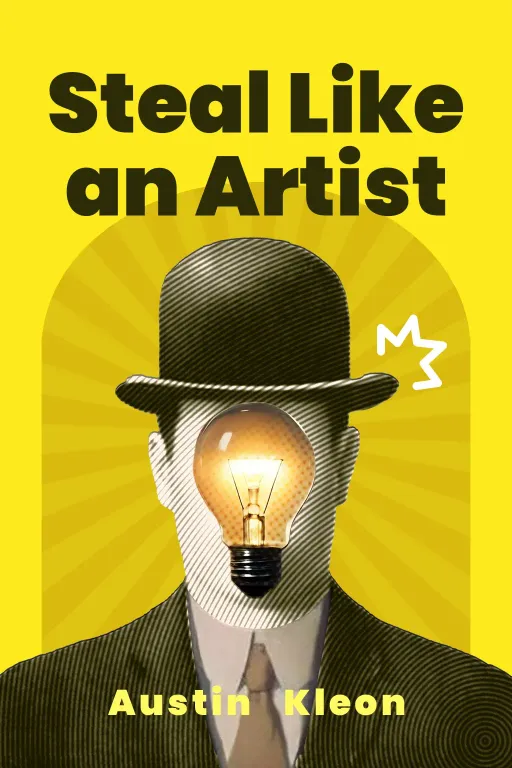
Nova: That’s a fantastic question, Atlas, and it brings us to the second core insight: originality isn't about conjuring something from nothing. It's about embracing influence and iteration. One of my favorite authors on this topic is Austin Kleon, with his book "Steal Like an Artist."
Atlas: "Steal like an artist"? That sounds a bit provocative.
Nova: It is! But his argument is profound. He says that all creative work builds on what came before. There's no such thing as a truly original idea in a vacuum. Great artists, great innovators, they embrace influence. They collect ideas, they remix them, they put their unique spin on them. It's not theft; it's a path to originality through transformation.
Atlas: So, it's like a chef taking classic ingredients but creating a completely new dish with them?
Nova: Exactly! They learn the techniques, they understand the flavors, and then they innovate. And a huge part of that innovation comes from an iterative culture—a place where ideas are protected while they're still in their awkward, nascent stages. This is where Ed Catmull's "Creativity, Inc." comes in, detailing how Pixar fostered a culture where groundbreaking animation flourished.
Atlas: Pixar is legendary for its creativity. What was their secret sauce for this 'iterative culture'?
Nova: Catmull describes how Pixar created the "Braintrust." These weren't meetings where executives came in and judged early ideas. They were structured feedback sessions with other directors and creative leaders. The rule was: be candid, be brutally honest, but always with the intention of helping the project, not tearing it down.
Atlas: That's a fine line, though. Giving candid feedback without crushing someone's spirit. How did they manage that?
Nova: It was all about the. The Braintrust wasn't about telling you, but about identifying problems. The director of the film retained full ownership and responsibility for how to fix those problems. This created a psychologically safe environment where ideas could be vulnerable, receive tough love, and then be iterated upon without fear of premature judgment or being micromanaged. It was a protective, iterative culture in action.
Atlas: That’s so smart. It’s not about finding the perfect idea on day one, it’s about having a system to make a good idea great, and even a bad idea better. It’s the opposite of that 'lone genius in a garret' image.
Nova: Completely. It dismantles the myth that creativity is a solitary endeavor. It's often a highly collaborative, iterative process that's nurtured within specific structures designed to protect those fragile early ideas, allowing them to grow and transform. It's disciplined play on a grand scale.
Synthesis & Takeaways
SECTION
Atlas: So, what I’m hearing is that creativity isn't this mysterious, chaotic force we just hope shows up. It's something we can actively cultivate by setting up the right frameworks.
Nova: Precisely! The "Creativity Trap" teaches us that lasting creative output isn't about chasing fleeting inspiration or working yourself to burnout. It’s about understanding that true originality emerges from a disciplined approach—where you embrace influence, remix ideas, and foster a culture that protects and refines those ideas through iteration. It’s a muscle that gets stronger with intentional practice within thoughtful boundaries.
Atlas: That’s actually really empowering. It makes creativity feel less like a gift you either have or don’t, and more like a skill you can develop.
Nova: Exactly! And we've got a tiny step for our listeners to start cultivating this structured freedom right away.
Atlas: Oh, I love a tiny step! Tell me.
Nova: For the next week, identify one creative project you’re working on. It could be anything—writing, designing, problem-solving at work. Dedicate just 15 minutes each day to collecting existing ideas, images, or concepts related to it. No judgment, no pressure to create anything new yet. Just observe, collect, and explore.
Atlas: That sounds incredibly doable, and actually, quite liberating. Just to collect without the pressure to produce. I think I’m going to try that with my podcast notes!
Nova: I think you'll be surprised at what emerges. It's that disciplined play that makes all the difference.
Atlas: I can definitely see how that would build a foundation for something truly original. We’d love to hear from our listeners if you try this tiny step, or how you’ve found structured freedom in your own creative life. Share your insights and experiences with us on social media!
Nova: This is Aibrary. Congratulations on your growth!