How to Navigate Scientific Breakthroughs Without Feeling Overwhelmed: Your Guide to Clarity.
10 minGolden Hook & Introduction
SECTION
Nova: What if everything you thought you knew about how scientific progress happens was, well, wrong? We're often told science is about accumulating facts, building brick by brick. But what if it's more like an earthquake, shaking everything to its foundation, only to rebuild something entirely new?
Atlas: Whoa, an earthquake? That's quite a metaphor, Nova. I always pictured science as this steady, logical climb up a mountain of knowledge, not a seismic event. You're saying it's less about adding new bricks and more about, what, completely redesigning the blueprint?
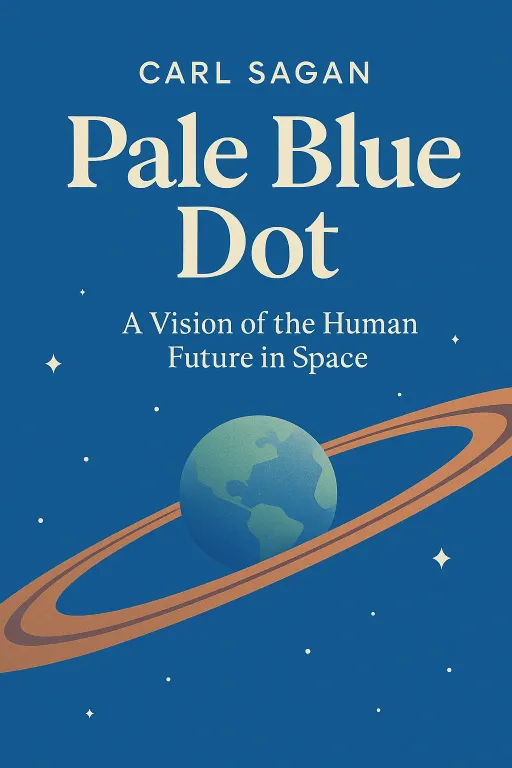
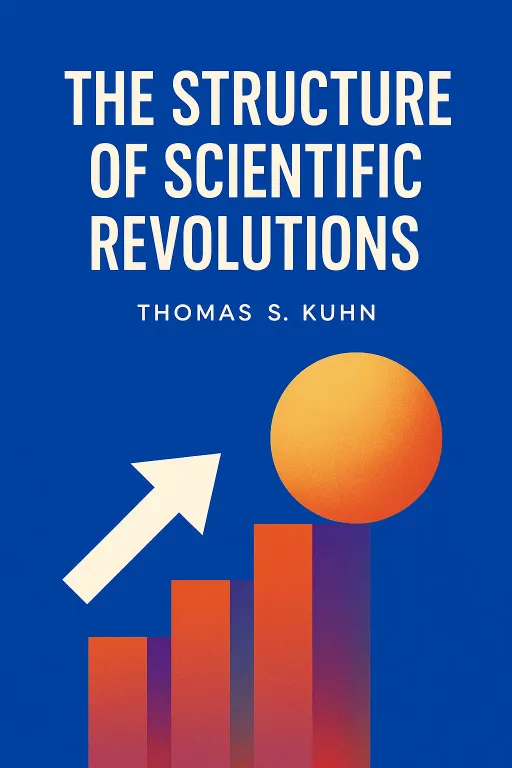
Nova: Precisely, Atlas. And that's exactly what we're diving into today, with two foundational texts that utterly redefine our understanding of progress: Thomas S. Kuhn's seminal work,, and the timeless classic,, by Carl Sagan.
Atlas: Both authors, in their own brilliant ways, challenged the very notion of 'scientific truth.' Kuhn, a physicist turned historian and philosopher, introduced the world to 'paradigm shifts,' a concept so profound it changed how we talk about progress in field. And Sagan? Well, he took the universe and made it understandable, inspiring generations to look up with wonder and question everything.
Nova: Exactly. Kuhn's book, originally published in 1962, was so revolutionary it sparked debates that continue to this day, fundamentally altering the philosophy of science. And Sagan's, which became a companion to his wildly popular TV series, brought the wonder of scientific inquiry to over half a billion people worldwide, making science a household conversation. And the reason these ideas are so crucial today is because we often feel lost amidst the constant stream of new scientific findings. It's like we're missing the bigger picture, the underlying shifts that redefine our understanding. This perspective helps you see the method behind the madness.
The Dynamic Nature of Science: Understanding Paradigm Shifts
SECTION
Atlas: Okay, so you’re talking about "the blind spot"—that feeling of being overwhelmed. It's like every week there's a new study contradicting the last one, or a groundbreaking discovery that makes yesterday's certainty feel shaky. As someone who tries to plan and create a secure foundation, that can be really unsettling.
Nova: It absolutely can be. And that feeling often stems from a misunderstanding of how science actually works. We tend to think of science as this ever-growing pile of facts, like adding more books to an already massive library. But Kuhn shows us something far more dramatic. He argues that science doesn't just accumulate facts; it undergoes these profound 'paradigm shifts.'
Atlas: "Paradigm shifts." That sounds... weighty. What does that actually mean for the average person trying to understand, say, what's good for them to eat, or the latest advice on raising children?
Nova: Think of a paradigm as an entire worldview, a fundamental framework of concepts, theories, and methods that a scientific community operates within. It's the lens through which they see and interpret the world. Now, imagine everyone believes the sun, moon, and stars all revolve around the Earth. That was the Ptolemaic model, the reigning paradigm for over 1400 years.
Atlas: Right, the geocentric model. That was the accepted truth for ages.
Nova: For ages! And it worked fairly well for predicting planetary movements, with some complex adjustments. But over time, observations started to get a little... messy. Anomalies piled up. The model became increasingly convoluted, like trying to patch a leaky boat with chewing gum. This period of accumulating anomalies, where the old paradigm struggles to explain new data, is what Kuhn called a 'crisis.'
Atlas: So, it's like a building with cracks appearing everywhere, but everyone's just trying to fill them in, rather than realizing the foundation is crumbling.
Nova: Exactly! The scientific community enters a period of profound uncertainty, even resistance to new ideas, because their entire way of seeing the world is being challenged. Then, a new idea emerges that offers a radically different, simpler, and more powerful way to explain those anomalies. Think of Copernicus proposing that the Earth and planets actually revolve around the Sun – the heliocentric model.
Atlas: Ah, the Copernican Revolution. That’s probably the biggest example everyone knows. But it wasn't just a simple update, was it? It was a complete flip.
Nova: A complete flip! It wasn't just adding a new planet; it literally moved Earth from the center of the universe. This wasn't merely a new fact; it was a fundamental shift in perspective that changed – how we understood our place in the cosmos, how physics worked, even how we measured time. The old ideas were replaced by a new way of seeing the world, causing periods of both crisis and profound progress. It felt like the ground shifting beneath people's feet, intellectually speaking.
Atlas: Wow. So, you're saying scientists actually this new, more accurate view at first? That sounds counterintuitive to what we imagine science to be – this objective pursuit of truth. I mean, if you're a parent trying to keep up with the latest child development research, and suddenly a widely accepted theory is overturned, it can feel incredibly destabilizing.
Nova: Absolutely. There's immense inertia within any established paradigm. It's not just about the data; it's about the entire community, the textbooks, the institutions built around that way of thinking. But it's precisely in these moments of crisis and revolution that science makes its most profound leaps. It's not a smooth, linear climb; it's a series of intellectual earthquakes, followed by entirely new landscapes.
Navigating the Unknown: Clarity in an Evolving Scientific Landscape
SECTION
Atlas: So, if science is constantly having these earthquakes and rebuilding entirely new landscapes, how does that help me find my footing? How do I navigate this without feeling completely overwhelmed, like I'm always one step behind the next 'paradigm shift'?
Nova: That's a brilliant question, Atlas, and it brings us beautifully to Carl Sagan. If Kuhn showed us the of scientific revolutions, Sagan showed us the – why this continuous expansion and questioning is not just necessary, but profoundly inspiring. His isn't just a chronicle of facts; it's a love letter to scientific inquiry itself.
Atlas: I still remember watching as a kid. He had this incredible way of making the vastness of space feel personal, almost poetic.
Nova: He did! Sagan beautifully illustrates how scientific inquiry, from ancient Greece to modern astronomy, continuously expands our universe, challenging previous limits and sparking new questions. It's a continuous process of breaking through our conceptual boundaries. Take our understanding of the universe's size, for instance. For a long time, our galaxy, the Milky Way, was thought to be the universe.
Atlas: Right, that was the prevailing view for ages, until we realized there were other galaxies.
Nova: Exactly! Edwin Hubble's observations in the 1920s didn't just add a few more stars; they revealed that those "nebulae" were actually other galaxies, billions of them, each a universe unto itself. That wasn't just new data; it was a paradigm shift in our cosmic address. And Sagan, through his storytelling, helped us grasp the sheer wonder and humility that comes with such an expansion of understanding.
Atlas: So, it's not about memorizing the latest set of facts, because those might shift. It's about understanding the of inquiry, the continuous questioning and challenging of limits? That perspective feels much more stable than trying to keep up with every single new discovery. It’s about being prepared for change rather than being blindsided by it.
Nova: Precisely! Understanding these shifts allows you to appreciate science not as a collection of static facts, but as a dynamic, evolving human endeavor. It empowers you to approach new information with a critical yet open mind, to ask: what assumptions is this built upon? What could challenge this view next? It gives you foresight.
Atlas: That's incredibly powerful. It's like having a map to understand the mapmakers, rather than just trying to follow their latest annotations. It helps me strategically approach new information, whether it's about climate science or the best way to manage family finances, by looking for the underlying frameworks rather than just the surface-level advice.
Nova: Exactly. And it leads to a deep question that both Kuhn and Sagan implicitly pose: What widely accepted scientific idea today might be a 'paradigm' ripe for revolution tomorrow? Are there any 'sacred cows' in science we might be unknowingly clinging to?
Atlas: That's a great question, Nova. It makes me think about things we take for granted. Like, perhaps our understanding of consciousness, or even the fundamental nature of reality at the quantum level. What if those paradigms are just waiting for their Copernicus?
Synthesis & Takeaways
SECTION
Nova: And that's the beauty of embracing this dynamic view of science. It moves us from feeling lost and overwhelmed by the constant stream of information, to finding clarity and even excitement in the face of evolving knowledge. It's about recognizing that science, at its heart, is a human journey of continuous questioning and discovery.
Atlas: So, the real clarity comes not from having all the answers, but from understanding that the answers themselves are always evolving. It’s about trusting the process of inquiry, even when it feels unsettling, because that's where true progress and deeper understanding lie. This whole conversation really helps ground me, knowing that anticipating challenges is part of the scientific process itself.
Nova: Absolutely. And perhaps the most important takeaway is this: How can cultivate a mindset that embraces uncertainty, that finds excitement in the unknown, and that's prepared to question even our most cherished assumptions, knowing that's where true progress lies? It's a journey, not a destination.
Atlas: That’s a powerful thought to end on. It gives me a new lens to view everything from quantum physics to the latest parenting advice – always looking for the underlying paradigm.
Nova: This is Aibrary. Congratulations on your growth!