The Network Effect of Ideas: How to Build Lasting Influence
10 minGolden Hook & Introduction
SECTION
Nova: Atlas, quick! Word association. "Ideas."
Atlas: Impact. Echoes. Headaches?
Nova: Ha! Headaches. I like that honesty. Okay, "Spread."
Atlas: Wildfire. Gossip. Good news!
Nova: Good news. Alright, last one: "Influence."
Atlas: Power. Connection. Legacy. Absolutely.
Nova: Legacy. That’s a powerful one. And it’s exactly what we’re diving into today: the legacy of ideas, and how some ideas don't just exist, they. They become contagious.
Atlas: Oh, I love that. Because honestly, Nova, it feels like some things just magically go viral, right? Like lightning in a bottle. But you’re telling me there’s a method to the madness?
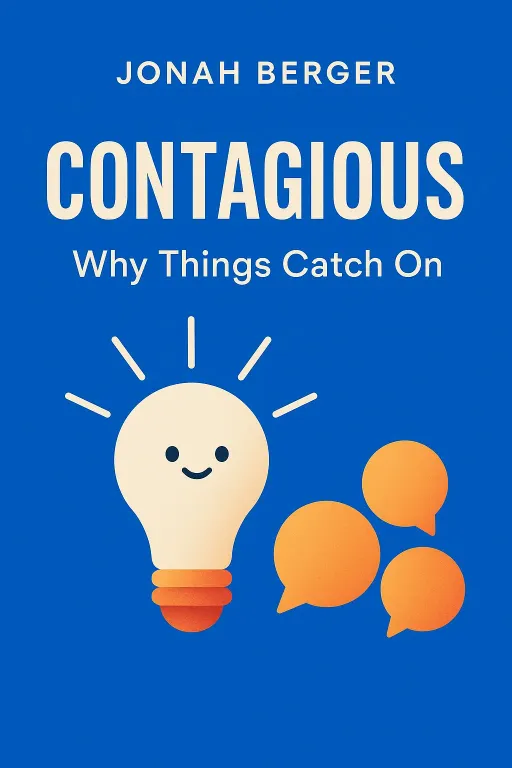
Nova: There absolutely is a method! Today, we're unlocking the secrets from two absolute titans in understanding how ideas spread. We're talking about Jonah Berger’s brilliant book, "Contagious: Why Things Catch On," and Malcolm Gladwell’s seminal work, "The Tipping Point."
Atlas: Two giants! I remember "The Tipping Point" being everywhere when it came out. It felt like it just... tipped into mainstream conversation itself.
Nova: Exactly! Gladwell's book became a cultural phenomenon, selling millions and popularizing the very concept of a 'tipping Point' into our everyday language. It's a testament to his storytelling. And Berger, a Wharton professor, he actually reverse-engineered virality, meticulously researching thousands of products and behaviors to distill his six core principles. His work is widely acclaimed for giving us a practical, data-driven blueprint for contagion.
Atlas: So you’re saying it’s not just random internet magic; there’s a science to getting an idea to stick? For anyone who wants their work to have real impact, this sounds crucial.
Nova: It is. Today we'll dive deep into this from two perspectives. First, we'll explore Berger's principles that make anything contagious, then we'll discuss Gladwell's critical individuals and moments that cause ideas to tip and cascade through society.
The Science of Contagiousness: Making Ideas Go Viral
SECTION
Nova: So, let's start with this provocative question, Atlas: What if going viral isn't just about luck, but a science that can be understood, and even applied?
Atlas: But wait. For so many of us, especially those trying to build something meaningful, virality feels like this elusive, random event. Isn't it just about being in the right place at the right time, or having a cute cat video?
Nova: That’s the common misconception! Berger's book, "Contagious," meticulously breaks down some things catch on and others don’t. He distills it into six powerful principles, an acronym he calls STEPPS.
Atlas: STEPPS. Okay, I’m intrigued. Lay it on me.
Nova: The first is. People share things that make them look good. Think about it: we want to appear smart, cool, or in-the-know.
Atlas: Oh, I get that. Like when you discover a hidden gem of a restaurant and just to tell everyone, not just because the food is good, but because you found it first.
Nova: Precisely! Berger gives a fantastic example of a bar in New York City called Please Don't Tell. It's a speakeasy, hidden behind a hot dog joint. You enter through a phone booth. The whole experience is designed to be a little exclusive, a little "if you know, you know."
Atlas: So the cause is the human desire for status, the process is creating an air of exclusivity, and the outcome is people talking about it to elevate their own social standing. That's clever.
Nova: It’s incredibly clever. The bar isn't just selling drinks; it's selling the story, the experience, the social currency that comes with being "in the know." They leveraged that fundamental human need.
Atlas: But how does that apply to, say, someone trying to spread an idea in a professional setting? We can't all open a secret speakeasy.
Nova: That's the beauty of it! You can make your ideas feel exclusive. Give certain people early access, or frame an insight as something only a select few truly grasp. Make sharing it feel like a badge of honor. For example, some software companies offer beta access to a new feature to a select group of users, making them feel like insiders. They then become powerful advocates.
Atlas: That makes perfect sense. So it’s about making people feel special for engaging with your idea. What’s next in STEPPS?
Nova: Next up are. These are cues in our environment that remind us of an idea or product. Think about how often you see a Kit Kat bar and think of coffee. That's a classic example.
Atlas: Oh, I’ve never consciously made that connection, but now that you say it, I can see it. It’s like their old slogan, "Have a break, have a Kit Kat." Breaks imply coffee.
Nova: Exactly. Kit Kat sales actually increased when they were paired with coffee breaks, not because Kit Kat changed, but because it became associated with a frequent environmental trigger.
Atlas: So you're saying I can make my insightful but perhaps dry quarterly report more contagious if I just link it to… Monday mornings?
Nova: Well, not quite that simple, but you're on the right track! It's about thoughtful association. If your idea is about efficiency, maybe you link it to the feeling of dread people get from a cluttered inbox. Or if it’s about connection, link it to the moment you see an old friend. The more frequently and strongly your idea is linked to common triggers, the more it will spread.
Atlas: Fascinating. So it’s building mental shortcuts for your ideas.
Nova: Precisely. And then we have – highly emotional content, whether awe, anger, or humor, is more likely to be shared. Then – making behavior observable helps it spread. – sharing useful information. And finally, – wrapping your message in a compelling narrative. Those are the six principles Berger lays out.
The Tipping Point: Catalysts for Cascade Change
SECTION
Atlas: That's fascinating, Nova. So Berger gives us the ingredients for contagiousness. But even with all these contagious ingredients, sometimes ideas just… fizzle. They don't quite take off. What makes something truly?
Nova: That's where Malcolm Gladwell's "The Tipping Point" comes in, and it's a perfect complement to Berger's work. Gladwell explores how small actions, at the right moment, can create a cascade of change. He argues that ideas spread like an epidemic, but they need specific conditions and specific people to reach that critical mass, that 'tipping point.'
Atlas: So, it's not just the idea is, but is spreading it and?
Nova: Absolutely. Gladwell identifies three critical types of people he calls the "agents of change": Connectors, Mavens, and Salesmen. Think of them as the unsung heroes of viral ideas.
Atlas: Agents of change. Okay, tell me about them.
Nova: First,. These are people with an unusually wide social circle. They're the ones who know everybody, and everybody knows them. They might not be the most influential in terms of expertise, but their sheer breadth of contacts allows ideas to jump across different social groups.
Atlas: So, the person who seems to know everyone at every party, from the CEO to the intern? The one who can bridge disparate social worlds?
Nova: Exactly. They are crucial for literally different parts of the network. Then we have. These are the information specialists, the data banks. They're not just collectors of information; they love to share it. They're the ones who know all the obscure facts, the best deals, the most efficient ways to do things. People trust their expertise.
Atlas: So, the consumer reports guru, or the colleague who always knows the best software solution for any problem? The person you go to when you need to know to do.
Nova: You've got it. They're the trusted experts. And finally,. These are the charismatic persuaders. They have an uncanny ability to influence others, to make you believe in what they're saying, to get you excited about an idea, even if it's not strictly logical.
Atlas: Ah, the natural charmers. The ones who could probably sell ice to an Eskimo, but in the best possible way. So it's all about these special people? What if you're not a super-connector or a walking encyclopedia of knowledge, or a born persuader?
Nova: That's a crucial point. It's not about all three yourself, but understanding their roles and how they interact. A Maven might discover a brilliant new product, a Connector might introduce it to their diverse network, and a Salesman might then convince people to actually try it. It’s a relay race of influence.
Atlas: So, the Maven finds the hidden gem, the Connector broadcasts its existence far and wide, and the Salesman gets you to actually pick it up and use it. That makes so much sense. It feels like Gladwell is showing us how the right people can act as accelerants for the contagious ideas Berger describes.
Nova: Precisely. And Gladwell also talks about the "stickiness factor"—how memorable and impactful an idea is—and the "power of context"—how the environment can either foster or hinder an idea's spread. These elements directly build on Berger's principles, showing us not just makes an idea spread, but and it achieves critical mass.
Synthesis & Takeaways
SECTION
Nova: Ultimately, Atlas, Berger gives us the foundational ingredients for contagion – what makes an idea inherently shareable. And Gladwell shows us the critical mass, the specific individuals, and the contextual factors needed for those ingredients to explode into a full-blown epidemic of ideas.
Atlas: So it's about intentional design, understanding human psychology, and then identifying where those crucial leverage points are in a network. It’s not just about having a great idea, but making it and. This is incredibly empowering for anyone trying to make an impact.
Nova: It truly is. Influence isn't accidental; it's a learnable skill. It comes from understanding the dynamics of human connection and the psychology of sharing. Your ideas deserve to be heard, and understood, and acted upon.
Atlas: It takes the mystery out of it, doesn't it? So, for our listeners, here’s a tiny step you can take this week. Think of an idea you want to spread. It could be something big, or just a small suggestion at work. Now, pick one of Berger’s principles – maybe Social Currency, by making it feel exclusive, or Triggers, by linking it to something people encounter daily. Brainstorm how you could apply just that one principle this week to give your idea a little boost.
Nova: And we’d love to hear what you come up with! Share your insights and experiments with the Aibrary community. Let’s make our good ideas contagious.
Atlas: Because your ideas deserve to be heard, and understood, and acted upon.
Nova: This is Aibrary. Congratulations on your growth!