The Power of Story: How to Captivate Your Audience and Grow Your Brand.
12 minGolden Hook & Introduction
SECTION
Nova: Atlas, five words. Give me your take on why most companies struggle to connect with their audience.
Atlas: Oh, that's easy! Confusing jargon, self-obsessed, forgettable noise.
Nova: Ouch! That's a brutally honest assessment, but you’re not wrong. Mine, which I hope offers a ray of hope: Clarity, customer-hero, irresistible connection.
Atlas: See, that’s why you’re the expert. Mine was just the problem, yours is the solution.
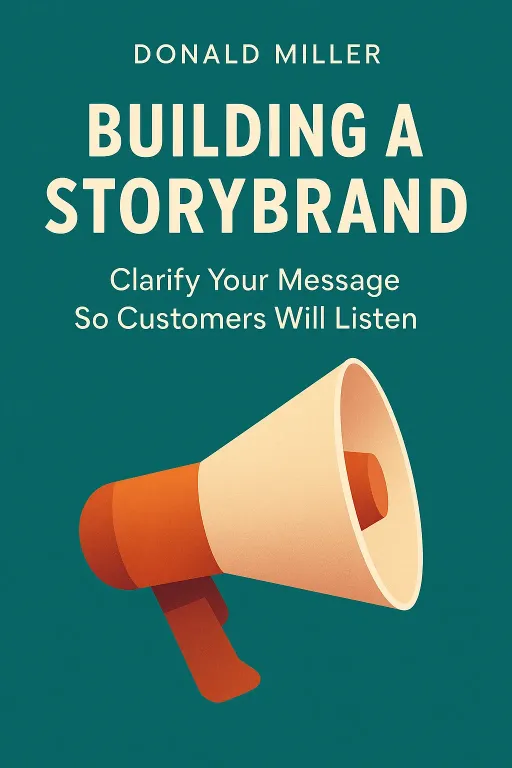
Nova: Well, today, we're diving headfirst into that solution. We’re exploring "The Power of Story: How to Captivate Your Audience and Grow Your Brand," drawing foundational insights from two phenomenal books: "Building a StoryBrand" by Donald Miller and "Made to Stick" by Chip and Dan Heath.
Atlas: Miller, the author of "StoryBrand," I remember reading that he actually started his career as a memoirist, right? Like, writing deeply personal narratives, not business strategy.
Nova: That's right! It's a fascinating detail. Donald Miller was well-known for his candid, accessible memoirs, like "Blue Like Jazz," which explored his spiritual journey in a way that truly resonated with people. That background, that deep understanding of personal narrative and authentic connection, fundamentally shaped his approach to marketing. He brought the power of storytelling, which is often seen as this esoteric art, and applied it with laser precision to the world of business communication. It’s why his framework feels so human, so intuitive, and so effective, rather than being just another dry marketing textbook.
Atlas: That’s actually really inspiring. It makes perfect sense why his method cuts through the usual corporate speak. So, I guess that leads us to the cold, hard truth he lays out: customers don’t buy the best products; they buy the products they understand fastest.
Nova: Exactly. Many companies, especially early-stage founders, get so wrapped up in their innovation, their features, their unique tech, that they forget to translate it into a language their customer understands and cares about. It’s like speaking fluent Martian to someone who only understands French.
Atlas: It’s not that the product isn’t good, it’s just the message isn't landing.
The Hero's Journey: Shifting Focus from Your Brand to Your Customer
SECTION
Nova: Precisely. And that’s where our first core idea comes in, straight from "Building a StoryBrand": The Hero's Journey. The fundamental shift is this: your customer is the hero of the story, not your brand. Your brand is merely the guide.
Atlas: Hold on, so you're saying businesses often make themselves the protagonist? I mean, shouldn't we be proud of our product and talk about how amazing it is?
Nova: That’s a natural inclination, and it's where many stumble. Imagine a movie where the wise old mentor character keeps talking about how great are, how powerful wisdom is, how many battles won. You'd quickly lose interest, right? You want to see the hero, the one facing the dragon, overcome their challenges.
Atlas: Okay, I see that. No one wants to watch a movie about Gandalf's personal diary.
Nova: Exactly! In business, we often act like Gandalf bragging about his magic. We talk about our features as if they're our superpowers, our company history as if it's the epic saga. But the customer is sitting there thinking, "What about dragon? What about journey?"
Atlas: So, how does this actually play out for, say, a startup building a new project management tool? They’re probably super proud of their AI-powered task allocation and seamless integrations.
Nova: Let's take a hypothetical company, we'll call them SyncFlow. When they first launched, their marketing was all about "SyncFlow: The Most Advanced AI-Powered Project Management Solution." They highlighted their proprietary algorithms, their cutting-edge tech. It was impressive, technically, but their sales were flat.
Atlas: I can imagine. It sounds like a lot of tech pitches I’ve heard. Impressive, but I'm not sure what it means for.
Nova: Right. So, SyncFlow, following Miller's framework, realized their mistake. They shifted their focus. They identified their ideal customer: a busy project manager, let's call her Sarah, who was constantly overwhelmed by scattered tasks, missed deadlines, and endless email chains. Sarah was the hero.
Atlas: So, the problem isn't "we built great AI." The problem is "Sarah is drowning in chaos."
Nova: Exactly! SyncFlow reframed their message. The 'villain' wasn't just disorganization; it was the emotional toll of that chaos – the stress, the late nights, the feeling of losing control. SyncFlow then positioned as the guide. They weren't just selling software; they were offering Sarah a 'plan' – an intuitive dashboard, clear communication channels, automated reminders – to achieve 'success': calm, efficient project delivery, getting home on time, feeling in control.
Atlas: That’s a great way to put it. It’s not about the tool; it’s about what the tool for Sarah’s life. The emotional stakes.
Nova: The stakes were clear: success meant a thriving project and a balanced life; failure meant burnout and project collapse. By seeing Sarah as the hero, SyncFlow didn't just sell software; they offered a transformation. Their marketing became less about their tech specs and more about Sarah's journey from chaos to clarity. It resonated because it spoke directly to her internal struggles and aspirations.
Atlas: That’s actually really inspiring. So, it's about connecting with the anxiety or the aspiration, then showing how your product is the bridge, not the destination itself. But wait, does this feel a bit… manipulative? Like we're just tapping into people's insecurities?
Nova: That's a fair question, and it's a critical distinction. The StoryBrand framework isn't about manipulation; it's about empathy and clarity. It asks you to deeply understand your customer's genuine problems and aspirations, and then articulate how your product genuinely helps them on journey. If your solution isn't authentic, the story falls apart. It’s about being a helpful guide, not a trickster. It's about serving, not selling.
Atlas: I can see that. It's about making your value proposition undeniably clear through a narrative lens. And that makes me wonder, once we have that clarity, how do we make sure that message isn't just understood, but truly unforgettable?
STICKY Ideas: Crafting Messages That Resonate and Endure
SECTION
Nova: Precisely! That naturally leads us to our second key idea, which often acts as a powerful amplifier to what we just discussed: the principles of "Made to Stick" by Chip and Dan Heath. They explored why some ideas survive and others die, and they boiled it down to six principles: Simplicity, Unexpectedness, Concreteness, Credibility, Emotions, and Story. The acronym is SUCCESs.
Atlas: SUCCESs. I love that. So, we've got the clear, customer-centric message from StoryBrand. Now, how do we make it sticky, so it actually spreads and endures in people's minds?
Nova: Let's consider another hypothetical – a sustainable fashion brand we’ll call EcoThreads. They’ve adopted the StoryBrand framework, positioning their customers as heroes seeking ethical, stylish clothing, with EcoThreads as their guide. But initially, their message, while clear, wasn't getting the traction they hoped for.
Atlas: Okay, so the foundation is there. What did they do to make it stick?
Nova: They applied the SUCCESs principles. First,. Instead of a long paragraph about "ethically sourced, organic cotton, fair trade certified, zero-waste production," they distilled their core message to "Wear Your Values." It’s short, punchy, and instantly communicates their essence.
Atlas: That’s powerful. It’s not just a product; it’s an identity.
Nova: Exactly. Next,. To grab attention, they didn't just talk about sustainability; they opened their campaigns with a shocking statistic about the sheer volume of fashion waste—billions of pounds ending up in landfills annually. Then, they immediately pivoted to: "But there's another way. A more beautiful way." This unexpected jolt made people pay attention.
Atlas: Wow, that definitely cuts through the noise. It’s not just another eco-friendly brand; it’s a solution to a massive, hidden problem. What about Concreteness?
Nova: For, instead of saying "we support sustainable practices," they showed it. They created short videos featuring specific artisans in their supply chain – you saw their hands weaving, you heard their stories. It wasn't an abstract concept; it was a tangible, human connection.
Atlas: That makes it real. It turns a buzzword into a person.
Nova: For, instead of just claiming they were ethical, they sought out an endorsement from an unexpected source: a respected environmental scientist who had previously been critical of the fashion industry. This outsider validation carried immense weight.
Atlas: That’s clever. It’s not just the brand saying it; it’s someone who has nothing to gain from it.
Nova: Then,. They connected ethical fashion not just to environmental responsibility, but to a feeling of pride, authenticity, and belonging. Their campaigns showed customers feeling confident and connected to a larger movement, rather than just buying clothes.
Atlas: So, it's not just about doing good; it's about feeling good, too.
Nova: And finally,. They encouraged customers to share stories of how EcoThreads helped them express their values and find their unique style. One customer shared how wearing EcoThreads gave them the confidence to speak up about environmental issues, turning a simple purchase into a personal narrative of empowerment.
Atlas: That’s a perfect example. It's the difference between hearing a fact and experiencing a truth. So, these two books, "StoryBrand" for clarity and "Made to Stick" for memorability, they really go hand-in-hand, don’t they? One helps you articulate the core message, the other ensures it resonates and spreads.
Nova: Absolutely. They are two sides of the same coin when it comes to compelling communication. StoryBrand gives you the blueprint for a clear narrative, and Made to Stick gives you the tools to make every element of that narrative unforgettable.
Synthesis & Takeaways
SECTION
Nova: When you combine the customer-as-hero approach from Miller with the SUCCESs principles from the Heaths, you're not just communicating; you're creating a movement. The profound insight here is that effective communication isn't about being clever with words or having the flashiest product. It's about serving your audience's journey, understanding their deepest desires and fears, and then articulating how you help them overcome their challenges in a way that is so simple, so unexpected, so concrete, so credible, so emotional, and so story-driven that it becomes part of their own narrative.
Atlas: That gives me chills. It's not just about selling a product or service; it's about empowering people to achieve their own version of success. The cost of unclear communication isn't just lost sales; it's a lost opportunity to genuinely connect, to build a community, to spark a movement around a product or idea that could truly make a difference.
Nova: It truly is. So, for our listeners, especially those early-stage founders out there, we have a tiny, but mighty, step for you.
Atlas: Oh, I love this part! What's the mission?
Nova: Describe your company's mission in one single, simple sentence. And here's the kicker: focus on your customer's problem and your unique solution, positioning them as the hero. Don't make it about you.
Atlas: That’s a brilliant exercise. It forces that clarity we've been talking about. And I imagine a lot of our listeners would benefit from sharing those one-sentence missions. So, if you're up for the challenge, share your one-sentence mission statement on social media. Tag us, let's see what you come up with, and let’s all learn from each other's clarity!
Nova: It’s a powerful way to put these ideas into practice immediately.
Atlas: Fantastic discussion, Nova. This has been incredibly insightful.
Nova: You too, Atlas.
Nova: This is Aibrary. Congratulations on your growth!