

Atomic Care: Building a Resilient Life and Career, One Habit at a Time
11 minGolden Hook & Introduction
SECTION
Nova: Michelle, have you ever finished a long, draining shift and felt like your own good habits—eating well, exercising, even just relaxing—are the first things to go? It's like you spend all day caring for others, and there's just no willpower left for yourself.
Michelle: Absolutely. It's a constant battle. You know you do those things, but the path of least resistance after twelve hours on your feet is often just collapsing on the couch with whatever food is easiest.
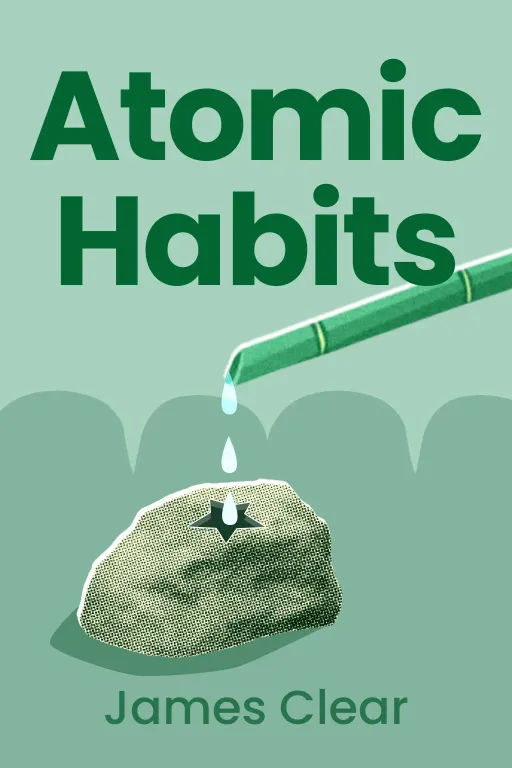
Nova: Exactly! And that's why I'm so excited to dive into James Clear's "Atomic Habits" with you today. It's less of a self-help book and more of an operating manual for how we function. It offers a completely different approach, arguing that the secret to change isn't about more willpower or even setting better goals.
Michelle: I'm intrigued. As a healthcare professional, we're all about protocols and systems, but we rarely apply that thinking to our own well-being.
Nova: Well, get ready, because that's exactly what we're going to do. Today we'll dive deep into this from two powerful perspectives. First, we'll explore why true transformation starts with an identity shift—focusing on who you want to become, not just what you want to do. Then, we'll uncover the secret to self-control, which has almost nothing to do with willpower and everything to do with becoming an architect of your own environment.
Deep Dive into Core Topic 1: The Identity Shift
SECTION
Nova: So let's start with that first, really radical idea: Identity. Clear says most people approach habits backward. We start with what we want to achieve, which he calls an 'outcome-based' habit. For example, 'I want to lose 20 pounds' or 'I want to run a marathon.'
Michelle: Right, that sounds like every New Year's resolution ever.
Nova: Exactly. And they often fail. Clear suggests a more powerful approach is an 'identity-based' habit. This starts with changing your beliefs about yourself. It starts with the question: Who do I wish to become?
Michelle: That feels... deeper. It's not just a target to hit, but a person to embody.
Nova: Precisely. He tells this brilliant little story to illustrate the difference. Imagine two people who are trying to quit smoking. Someone offers them a cigarette. The first person says, "No thanks, I'm to quit."
Michelle: Okay, I can picture that. They're still identifying as a smoker who is struggling.
Nova: Exactly. Their identity is still 'smoker.' But the second person says, "No thanks, I'm not a smoker."
Michelle: Oh, that's a world of difference. It's a statement of fact. It’s who they. There's no room for negotiation.
Nova: That's the power of it! The first person is hoping to achieve an outcome. The second person is embodying a new identity. Every time you turn down a cigarette, you're casting a vote for your identity as a non-smoker. The book is full of these examples, like a man who lost over 100 pounds not by focusing on the scale, but by constantly asking himself one simple question before every action: "What would a healthy person do?"
Michelle: That resonates so much with my work. In healthcare, there's immense pressure to focus on outcomes—a patient's vitals, their lab results. But the best professionals I know, the ones who avoid burnout and make the fewest mistakes, they operate from identity. They think, "I am a thorough and empathetic professional." That identity guides hundreds of tiny actions throughout the day—double-checking a dosage, taking an extra minute to listen to a patient, keeping meticulous notes. It's not a checklist; it's who they are.
Nova: That's a perfect parallel. So the goal isn't just 'chart accurately,' the identity is 'I am a diligent caregiver.'
Michelle: Yes! And it applies to self-care, too. I've had goals like 'I need to eat better.' It feels like a chore. But reframing it as 'I am a person who nourishes my body so I can be my best for my patients and myself'... that's motivating. That's an identity I want to vote for. It changes the feeling from one of deprivation to one of self-respect.
Nova: I love that framing: 'voting for your identity.' It makes every small choice feel meaningful. It's not about being perfect, but about casting more votes for the person you want to be. If you want to be a writer, the goal isn't to write a book, it's to become the kind of person who writes every day.
Michelle: It feels more sustainable because it's rooted in self-belief rather than just sheer effort. You're not just 'doing' a habit; you're 'being' the person.
Deep Dive into Core Topic 2: The Architect of Choice
SECTION
Nova: And this idea of casting votes for your identity leads perfectly to our second point. Because if our actions shape who we are, how do we make the right actions, the right 'votes,' easier? The book's answer is so surprising: Stop focusing on motivation and start focusing on your environment.
Michelle: So it's not about just trying harder?
Nova: Not at all. Clear argues that 'environment is the invisible hand that shapes human behavior.' And he uses an example from your world to prove it. A researcher named Anne Thorndike did a study at Massachusetts General Hospital. She wanted to see if she could get staff and visitors to drink more water and less soda, but without saying a single word to them. No posters, no lectures, no motivational speeches.
Michelle: Okay, as someone who has to give health advice all the time, I'm very curious how she did that.
Nova: It was incredibly simple. The cafeteria refrigerators next to the cash registers were originally filled only with soda. So, the research team just added water as an option in those fridges. They also placed a few baskets of bottled water next to the food stations around the room. That's it. They just changed the environment.
Michelle: And what happened?
Nova: Over the next three months, soda sales dropped by 11.4 percent. And sales of bottled water shot up by 25.8 percent. They made the desired choice the most obvious and easy choice, and people's behavior changed automatically, without them even thinking about it.
Michelle: That is fascinating. It completely bypasses the need for willpower. We spend so much time trying to educate patients, to convince them to make better choices. But this suggests that simply redesigning the hospital environment—like putting healthier snacks at eye level in the vending machine—could have a bigger impact than any brochure we hand out.
Nova: It's a game-changer, right? The book says the people with the best self-control are typically the ones who need to use it the least. They're not heroes with superhuman willpower; they're just better at structuring their lives to avoid tempting situations in the first place. He shares a more extreme example from the Vietnam War, where over 15% of U. S. soldiers were addicted to heroin. But when they came home, 9 out of 10 of them simply stopped overnight. The radical change in environment removed the cues that triggered the habit.
Michelle: Wow. So self-control isn't about resisting temptation, it's about removing it. That makes so much sense. After a stressful shift, if I come home and the first thing I see is a bag of chips on the counter, I'm going to eat it. My willpower is depleted. But if the first thing I see is a bowl of fresh fruit I put there that morning...
Nova: You're making it easy to act like the 'healthy person' you want to be! You're being the architect of your own choices.
Michelle: Exactly. I could lay out my yoga mat the night before. That's a cue for my identity as 'a person who prioritizes mental peace.' Or I could create a 'no-phone zone' in my bedroom to protect my identity as 'a person who gets restorative sleep.' It's not about fighting the urge to scroll; it's about making the urge less likely to even appear. It's proactive self-care, not reactive.
Nova: You've nailed it. You design your environment to make your desired identity the path of least resistance.
Synthesis & Takeaways
SECTION
Nova: So, when we put it all together, it's such a powerful and, honestly, a more compassionate way to think about change. It’s a one-two punch: First, as we discussed, you decide who you want to be. You define that identity. 'I am a calm person.' 'I am a lifelong learner.' 'I am a rested professional.'
Michelle: And you let that identity guide you, rather than a punishing, outcome-based goal.
Nova: Exactly. And second, you look at your world—your home, your office, your digital spaces—and you ask, "How can I design this space to make it incredibly easy for that person to thrive?" You become the architect for your desired self.
Michelle: It takes the pressure off. It's not about a massive, painful life overhaul. It's about small, intentional tweaks to your world. It feels more like a creative project than a battle.
Nova: I love that. A creative project. So, to leave our listeners with something really tangible, what's your final thought on this, Michelle? How can someone listening right now start this creative project?
Michelle: I think it's about making it incredibly small. Don't try to redesign your whole life tonight. Just ask yourself one question: 'What's one tiny thing I can do to my space, right now, that the future me I want to be would thank me for?' Maybe it's just putting a book on your pillow instead of your phone. Maybe it's putting a water bottle on your nightstand. Or laying out your running shoes. That's it. That's the start. It's one vote for that new identity, made easy.
Nova: A single, simple vote. That's a perfect place to start. Michelle, thank you so much for this insightful conversation.
Michelle: Thank you, Nova. This has been incredibly clarifying.









